
Version 2.6

Set a name to the custom cost
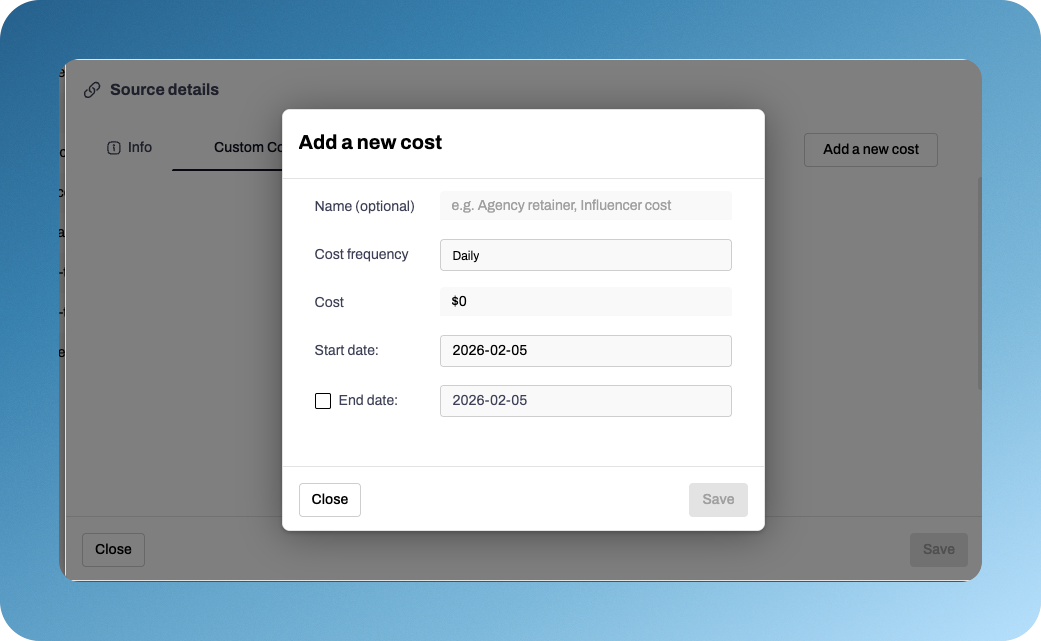
Custom costs now support an optional Name field that can be set via the UI, CSV import, and API.
This makes it easier to label fixed costs such as agency retainers, influencer fees, or other recurring marketing expenses and track them consistently.
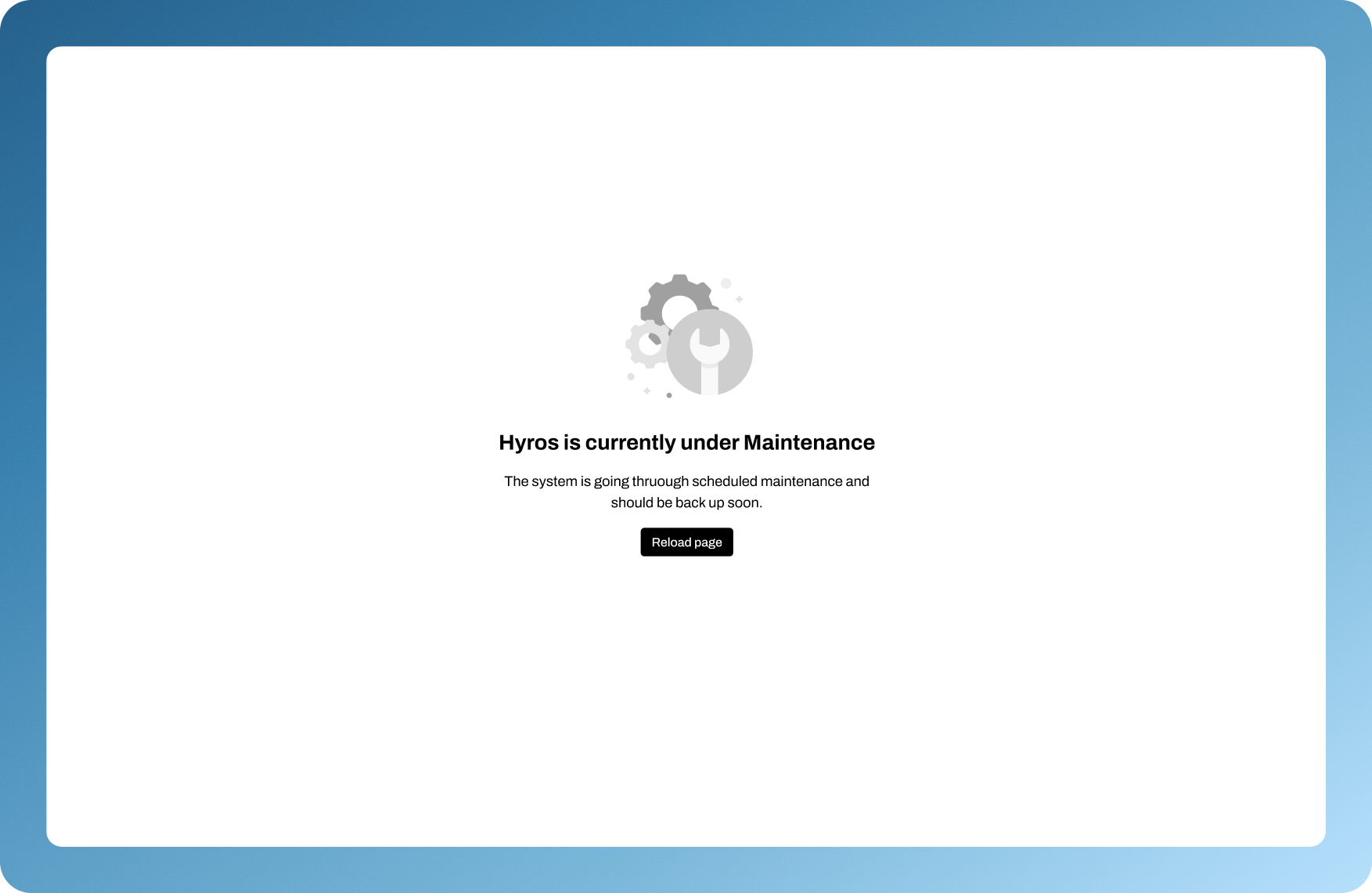
Updated maintenance page design
The maintenance page has been redesigned based on new Figma specs to better reflect the current Hyros brand and provide clearer messaging when the app is temporarily unavailable.
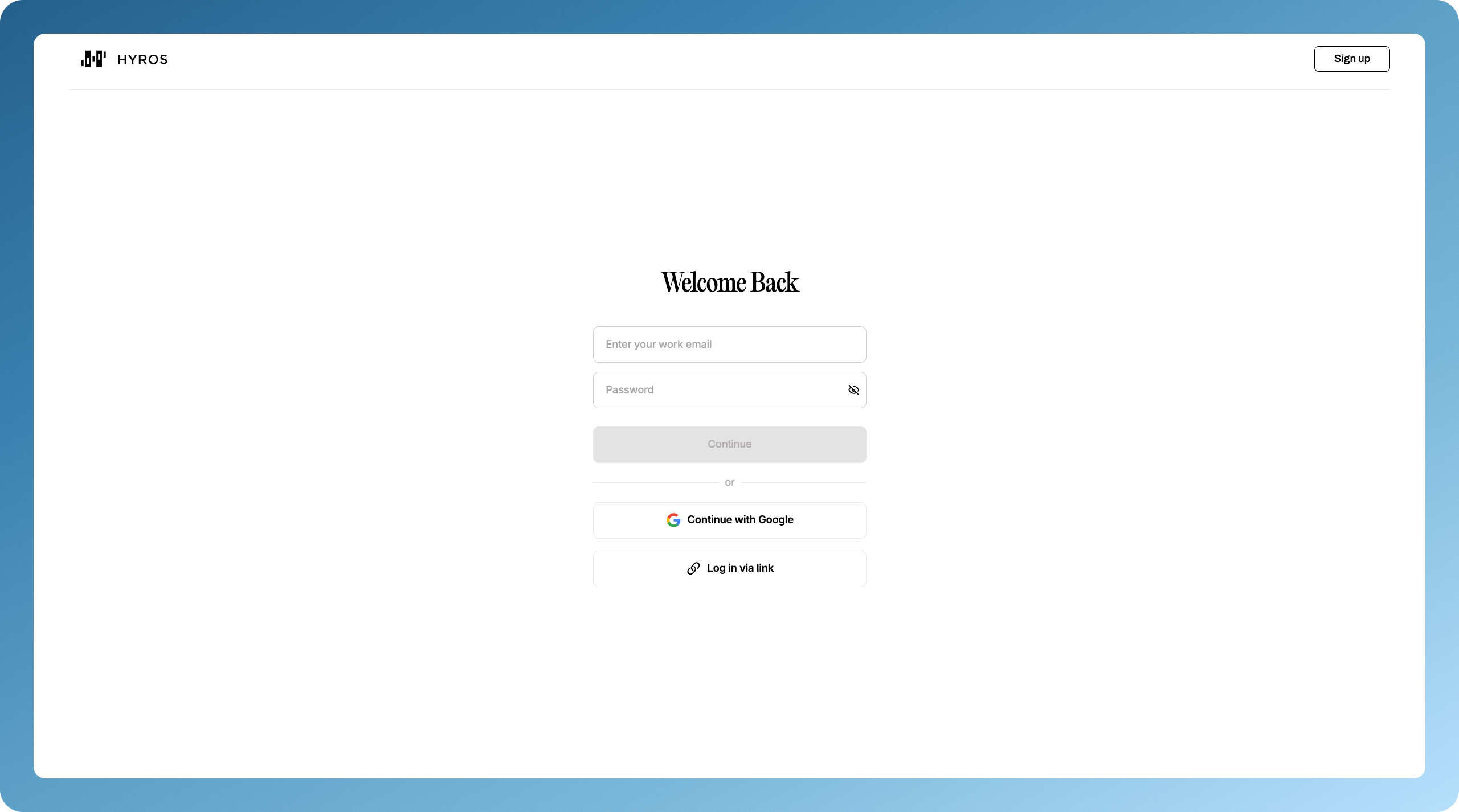
Log in securely with a one-time link ( no password needed )
We introduced a new login option that lets users access Hyros via a oneâtime link sent to their email. Instead of resetting a password, users can click the link and be logged in directly, with the token consumed after first use. This flow reuses the existing resetâpassword infrastructure for a secure and familiar experience and is now also used for users signing up via Flexible Funnel on mobile.
We also added the option to sign up and log in via Google login.
Improvements & Bug Fixes
Default area code for leads
Accounts can now configure a default area code that is automatically applied to their leads. This reduces confusion and inconsistencies when leads enter phone numbers with or without an area code.
Deeper analysis for Add-to-Cart events
Add-to-Cart (ATC) Deep Mode in the Performance report now groups events by cart ID, similar to how Sales Deep Mode groups by order. A new “Revenue” column shows the total revenue generated by each cart, making ATC performance easier to evaluate at a granular level.
More reliable Deep Mode customer metrics
We improved how Deep Mode handles very high-volume rows so that customer counts don’t miss users hidden beyond previous technical limits. The report now uses more efficient OpenSearch aggregations and correctly reflects totals even when there are more than 10,000 records.
Faster U-shaped attribution queries
The Uâshaped attribution report query was simplified and optimized to reduce heavy aggregations and nested terms. This leads to faster load times and fewer memoryârelated errors when working with large datasets.
Consistent AND/OR behavior for attribute filters
We aligned how filters behave when combining multiple price and tag conditions. Both “Filter leads with tags” and “Sales price” filters now follow a consistent AND/OR logic, reducing confusion and making filtered results easier to interpret.
Better ad-level search in Sourceboard
Adâlevel search has been fixed for tabs and nested views in Sourceboard. Since adâlevel reporting uses a different “onâdemand” data flow, the search logic was updated so that filtering by ad now behaves as users expect across the UI.
Preserve grouping from the Top Sources widget
When you click through from the Top Sources widget to the main report, the chosen grouping/attribution level is now preserved. This prevents the report from “resetting” to a default grouping and keeps context between the widget and the underlying report.
SourceBoard performance improvements
We made several backend improvements that benefit reporting performance overall:
- Optimized queries to reduce slow responses in highâtraffic scenarios.
- Introduced a better strategy for handling repeated, heavy API requests from specific users (e.g., selective rate limiting and/or caching) to avoid slow queries on large click indices.
- Reworked the OriginLeadReassignationProcessor to significantly improve processing time for leads with many children and related sales.
- Periodic costârelated processing jobs were reviewed and adjusted to use more stable backing data structures, reducing reprocessing of the same leads/sessions.
Google Ads: send more attribution data and track new parameters
We updated our Google Ads conversion processing to support sending both gclid and gbraid/wbraid together when available. Hyros now stores these values on clicks, propagates them through pending conversions, exposes them where relevant (including the Lead Details modal), and ensures full backward compatibility with existing click formats.
ManyChat: keep tracking sessions after widget changes
ManyChat deprecated the mcwidget-overlay widget, which could have broken session tracking. We implemented a workaround to continue capturing session IDs reliably, so your attribution remains intact even after ManyChat’s changes.
Shopify: safer handling of access token issues
We made several improvements to Shopify integrations:
- 401 responses are now handled via a dedicated “invalid token” flow that automatically marks the integration as inactive, notifies the user, and exposes a way in the UI to reactivate access.
- Shopify webhooks are actively deactivated when an integration is deleted, when a user is deleted, or if a user has been blocked for more than a month – reducing unnecessary event processing.
- Tracking endpoints for the Shopify pixel and static scripts were cleaned up to use proper tracking bases and typed variables, improving maintainability and reducing the risk of tracking misconfiguration.
Pipedrive: fully moved away from deprecated webhooks
We removed the deprecated Pipedrive API keyâbased code and cleaned up resetâwebhook logic to avoid unintentionally invalidating integrations. As part of this, we no longer support Pipedrive’s V1 webhooks and now rely on the newer, supported mechanisms.
HighLevel: more reliable token refresh (backend work)Â
We conducted a deep investigation into intermittent token refresh issues with HighLevel, including race conditions between DB and cache updates and frontâend config overrides. The token refresh flow and caching strategy were adjusted to keep database and cache in sync and to prevent valid tokens from being overwritten by stale data, significantly reducing invalidâtoken errors.
Automatic cleanup of duplicated leads
A background job now progressively finds and resolves cases where multiple leads share the same email ( caused by a historical bug ). The job merges data, preserves a parent lead, and cleans up duplicates, resulting in cleaner lead data and more accurate reporting.
Test and pipeline stability
We fixed several flaky or crashing automated tests and adjusted related integration persistence logic. These changes improve CI/CD pipeline reliability, reduce false negatives in test runs, and help us ship changes with higher confidence.