
Version 2.6.7

Dashboard Email Sharing & Scheduling
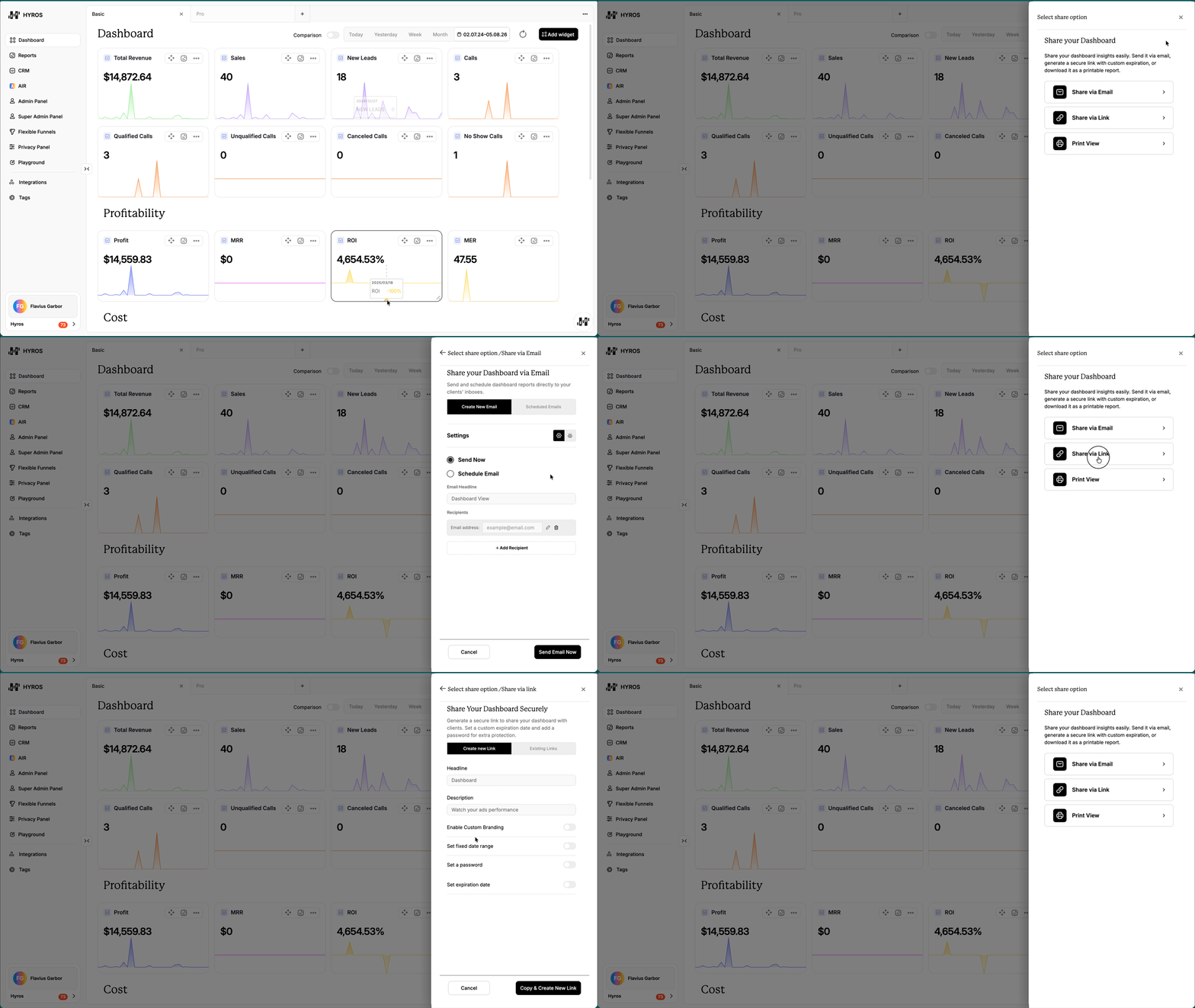
You can now share your dashboard reports directly via email - either immediately or on a scheduled basis.
Send to one or multiple recipients, manage all scheduled sends from a dedicated view, and preview exactly how the email will look before it goes out. Scheduled sends can be edited or removed at any time.
Traffic Report – Visual Chart Section
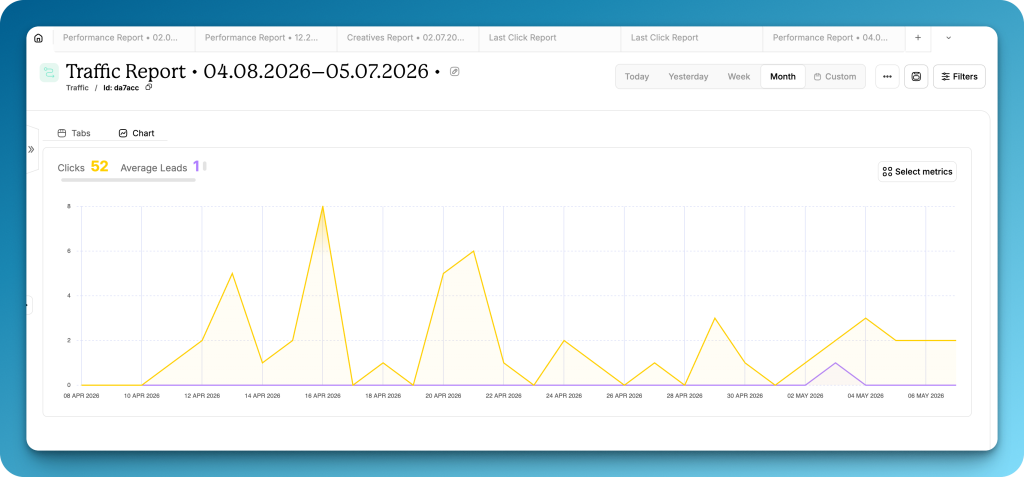
The Traffic Report now includes a chart section that visualises key metrics – Clicks, Leads, Visitors, and Source Links – over time at the domain level. This makes it faster to spot trends and anomalies without having to scan raw data tables.
Google Ads Offline Conversions – Higher Match Rate
Hyros now sends significantly richer data to Google Ads when uploading offline conversions, bringing us in line with Google’s current standards. Improvements include:
- Gmail normalisation: Email addresses using @gmail.com or @googlemail.com are now cleaned and normalised before hashing (dots removed from username, plus-aliases stripped), improving match accuracy.
- Additional hashed identifiers: Hashed phone number, first name, and last name are now included alongside hashed email in every conversion upload.
- Address data: Country code and postal code are now included in conversion payloads.
- Removed artificial delay: Conversion data is now sent to Google without the previous 6-hour delay, meaning your attribution data appears faster.
Bing Ads – Keyword Tracking Finalised
Keyword tracking for Bing Ads has been completed and stabilised. Bing users will now see accurate keyword-level data flowing through their reports.
TikTok – Smart+ Campaign Awareness
Hyros now correctly identifies TikTok Smart+ and Upgraded Smart+ campaigns. Because TikTok does not return landing page URLs for these campaign types, a clear warning is shown in the tracking template UI. Smart+ campaigns are excluded from bulk tracking parameter updates to prevent configuration errors.
Improvements
Lead Address Data – Populated from Webhook Events
Hyros now captures and stores address information (country, postal code, etc.) from incoming webhook events for major integrations including Shopify, WooCommerce, and Stripe. This data is used to enrich conversion uploads, directly supporting the improved Google Ads match rates delivered in this release.
Live Cost Framework – Smarter Retry Handling
The Live Cost data pipeline now includes intelligent retry logic. Transient failures are retried automatically, while non-recoverable errors (such as invalid credentials or revoked tokens) are identified and skipped – preventing repeated failed attempts and unnecessary processing load.
Source Stats – Batch Processing at Source Creation
When new ads or sources are imported, Hyros previously fetched creation dates one by one – a pattern that caused rate limit issues at scale. This has been reworked to fetch creation dates in batches, significantly reducing API request volume and improving reliability during large ad imports.
Webhook Lifecycle Management – Stripe, HubSpot & HighLevel
Hyros now automatically deactivates webhooks for Stripe, HubSpot, and HighLevel integrations when an integration is deleted, the account is removed, or the account has been blocked for more than one month. This prevents orphaned webhooks from generating unnecessary traffic and errors.
AuthorizeNet – Isolated Webhook Processing Queue
AuthorizeNet webhook events are now processed on their own dedicated queue, isolated from other integrations. This ensures that any slowdown or backlog in AuthorizeNet processing cannot affect the webhook throughput of other integrations.
Bing Ads – Personal Account Migration Warning
Users who connected Bing Ads using a personal Microsoft account (Outlook, Hotmail, etc.) will now receive a clear in-app notification and warning, as Microsoft no longer allows personal accounts to access the Bing Ads API. Affected users are prompted to re-integrate using a work or organisational account. New integrations using personal accounts are blocked at the point of connection.
Google Audiences – Improved Error Handling
Several edge-case errors from the Google Ads Audiences API are now handled gracefully, including quota exhaustion, EU political advertising declaration requirements, invalid user list types, and short deadline errors. Affected accounts are surfaced clearly rather than causing silent processing failures.
Facebook Audiences – Improved Error Handling
Two Facebook Audiences error cases are now handled correctly. Value-based custom audiences that require lookalike values are excluded from the Hyros UI to prevent users from incorrectly tagging them. Accounts where the ad account owner has not granted the required permissions are also handled cleanly with appropriate error reporting.
Deep Mode Table – CRM Separation & New States
The Deep Mode table has been refactored to cleanly separate CRM-specific functionality from general Deep Mode use cases. Column configurations are now correctly scoped per context. The Info column also now supports two new call states: No Show and Cancelled.
Report Performance – Duplicate Calculation Prevention
Hyros now validates in-flight report requests to prevent the same report from being calculated twice simultaneously. When a report is already being computed, subsequent identical requests receive the cached result as soon as it is ready, reducing unnecessary processing load.
Integration Deletion – Faster Query Performance
A long-standing performance issue affecting users with large lead databases has been resolved. The query used when deleting an integration’s data has been significantly optimised, preventing timeouts and slowdowns during the deletion process.
Bug Fixes
Dashboard – Default Views Not Restored After Deleting All Views
When a user deleted all dashboard views, the default Basic and Pro views were not automatically recreated until the page was manually reloaded. This has been fixed – default views are now restored immediately without requiring any user action.
Reports – Switching from Ad Level Report Broke Source Count
Switching from the Ad Level report to another report type caused the source count to incorrectly display as zero. This prevented users from generating new reports without reloading the page. The source state is now correctly preserved when switching between report types.
Trends Report – Incorrect Date Range Validation Message
The Trends report showed the error message “The timeframe cannot be larger than 10000” but the actual maximum accepted value was 365 days. The validation logic has been corrected to accurately reflect the true limit.
WooCommerce – Runtime Error When Checking Webhooks
A runtime exception occurred when Hyros attempted to check and create webhooks for WooCommerce stores that do not use the Subscription plugin. This has been resolved with proper error handling to prevent unnecessary failures during the webhook verification process.
Shopify – Web Pixel Update Error on Config Change
An error was occurring when updating Shopify configurations for stores where the web pixel ID was missing or where the integration lacked the required read_pixels scope. Hyros now handles both cases gracefully – skipping the GraphQL update when no pixel ID is available and logging a clear warning when a pixel ID is absent despite a successful status check.
Meta – Error Processing Automatic Source Links
A processing error affecting Meta (Facebook) automatic source link detection has been resolved. The issue occurred when a null response was received from the Meta API during source link processing.
Stripe – Webhook Deauthorisation Event API Version Mismatch
Stripe was sending the account.application.deauthorized event using an older API version than all other Stripe events. This is a known issue on Stripe’s side with no current ETA for a fix. A workaround has been implemented on the Hyros side to handle this event correctly regardless of the API version it arrives with.
UI – Post-Rebranding Visual Fixes
A number of visual inconsistencies introduced after the platform rebranding have been identified and corrected, ensuring a consistent look and feel across the application.
Tracking – Duplicate Lead Processing Error Resolved
An error was occurring during webhook event processing when the same lead record was encountered more than once within a single database session. This has been resolved, improving the reliability of lead processing for high-volume webhook events.
Hyros AIR
Lead Import from Email Integrations
When you connect Klaviyo to AIR, your existing subscriber list is now automatically imported into Hyros. This means AIR can start identifying and targeting your leads from day one, without any manual CSV uploads or extra setup steps. Mailchimp lead import is also in progress and will follow in the next release.
User Comeback URL for Shopify Users
Analysts can now generate a personalized link to bring Shopify users back to the AIR setup flow if they dropped off before completing onboarding. The system automatically detects whether the user has already integrated Shopify and presents the correct setup variant. It also pulls estimated revenue from Shopify to show a projected ROI range during the re-engagement prompt.
AIR Charges for Attributed Phone Calls
AIR now tracks and bills for phone calls that are attributed to an AIR agent. Every time a call is successfully attributed, an AIR charge is created and logged. This ensures your usage reporting and invoicing accurately reflect the full value AIR is generating across all channels, not just email.
Separate Billing Line for SDR Response Emails
SDR reply emails are now billed as a distinct line item on your Stripe invoice, clearly labelled as SDR responses. This separates them from standard AIR email charges so you can see exactly what you are being billed for. All emails are charged immediately upon sending, and no email is ever charged more than once.
Subject Line Fallback for Discount Emails
AIR now generates a safe fallback subject line alongside every AI-written email that includes a discount. If the discount code is unavailable or was not found at send time, the system automatically uses the fallback subject instead of sending a broken or placeholder-filled subject line. This applies to Simple Email Templates and Strategies alike.
Improvements
Email Integration Architecture Overhaul
All email platform clients (Klaviyo, Outlook, SendGrid, Mailchimp, SMTP, ActiveCampaign, Kit) have been consolidated into a single shared module. Previously, these were scattered across multiple services, causing redundant HTTP calls and tight coupling between AIR and the core Hyros backend. The new architecture uses smart caching and event-based sync to reduce unnecessary network traffic and make each integration faster and more reliable.
Per-Integration Logic Cleanup: Klaviyo, Mailchimp, SMTP, ActiveCampaign, Kit, Outlook
Each email integration service has been refactored so that platform-specific API logic lives in the correct layer. This is an internal quality improvement that makes future integration work faster and reduces the risk of bugs caused by misplaced logic. Customers benefit from more consistent and predictable integration behaviour across all connected email platforms.
Faster and More Reliable Product Page Scraping
AIR’s strategy pipeline now checks a local cache before fetching product page data from the web. If the page was already scraped recently, the cached result is used directly, skipping the outbound request entirely. This significantly reduces the number of external calls made during email generation and eliminates rate limit errors that were previously occurring with certain hosting providers.
Real-Time Dashboard Updates via Redis Pub/Sub
WebSocket connections that power AIR’s live dashboard updates have been migrated from Kafka broadcasts to Redis Pub/Sub. This change improves the speed and reliability of real-time updates you see in the AIR interface, such as flow status changes and live metrics refreshing.
Bug Fixes
Mailchimp “Recipients Not Ready” Race Condition Resolved
A race condition in the Mailchimp integration was causing campaign sends to fail with a “recipients not ready” error when a newly added subscriber had not yet propagated through Mailchimp’s internal systems. A retry policy and post-send validation check were added to handle this gracefully. Campaigns that were actually delivered despite the error are now correctly marked as sent.