
Why 7-Figure Info Businesses Swear by Advanced Ad Tracking
Seven-figure info businesses use advanced ad tracking because native platform pixels cannot see how their funnels actually convert. A course or coaching sale touches email, webinar, retargeting, and often a phone call before money moves. Pixel-based attribution misses most of that journey. Advanced tracking closes the gap and shows which ad spend is actually responsible for revenue.
Table of Contents
- Why Standard Pixel Tracking Fails Info-Product Funnels
- The Real Cost of Incomplete Attribution at Scale
- What Advanced Ad Tracking Actually Tracks
- Why 7-Figure Operators Made the Switch
- FAQ
Key Takeaways
- Native platform pixels were built for e-commerce click-to-purchase events, not the multi-channel, multi-week journeys that info-product and coaching funnels require.
- A course or coaching funnel can involve 6 to 8 touchpoints before purchase. Platform attribution credits one or two and misses the rest.
- At $20K or more per month in ad spend, misattributed conversions translate directly to wrong budget decisions: cutting ads that work and scaling ones that do not.
- Tony Robbins’ ad team scaled spend 43% in six months after implementing Hyros. Alex Hormozi is a named public endorser who calls Hyros essential for seven-figure operators.
- Advanced attribution does not replace marketing judgment. It gives operators the accurate data to exercise that judgment at scale.
Why Standard Pixel Tracking Fails Info-Product Funnels
Your ad platform says 3.2 ROAS. Your bank account says something different. That discrepancy is not a misconfigured event or a stale pixel. It is a structural limitation built into every native ad platform, and it gets worse the more complex your funnel becomes.
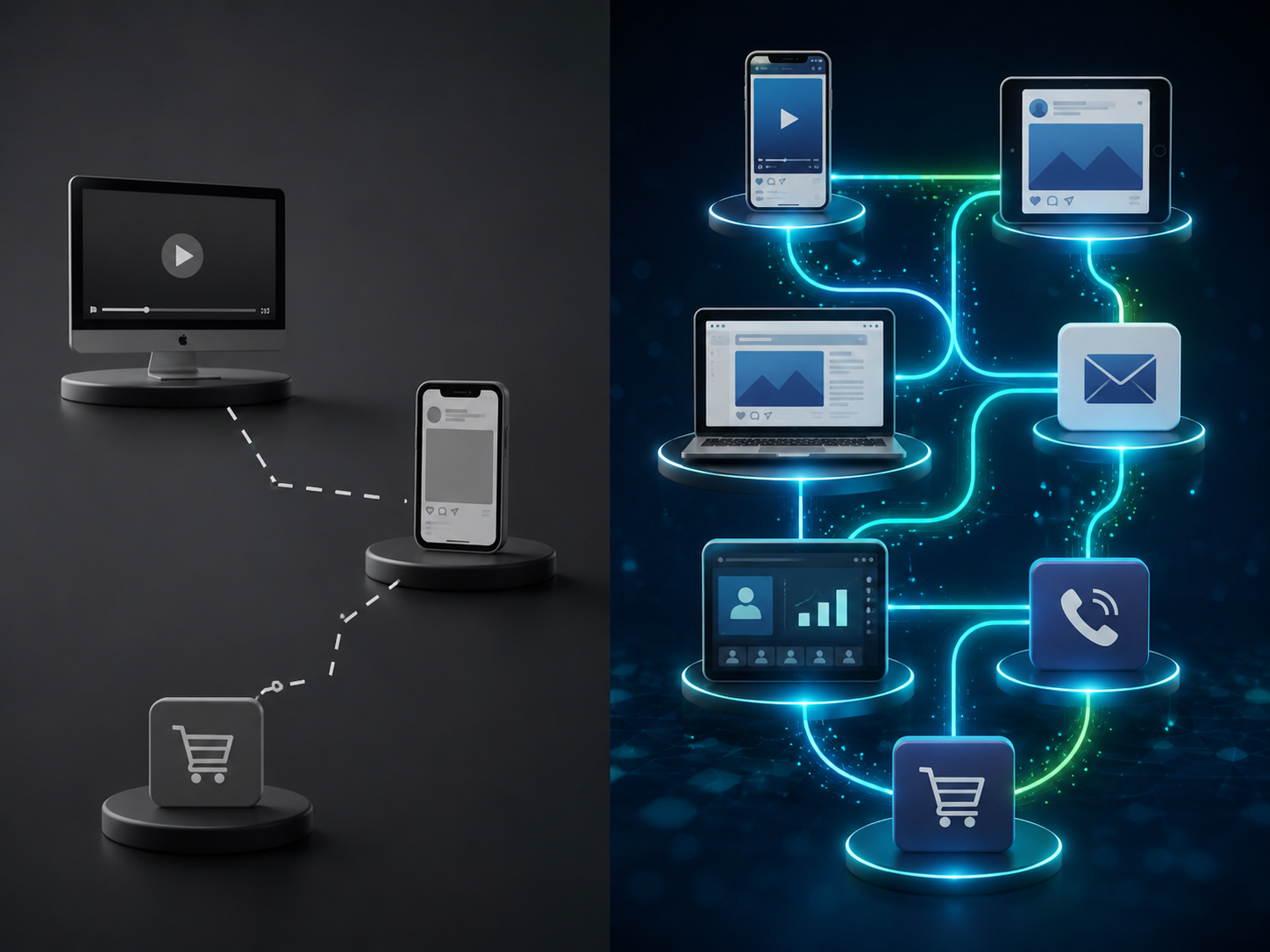
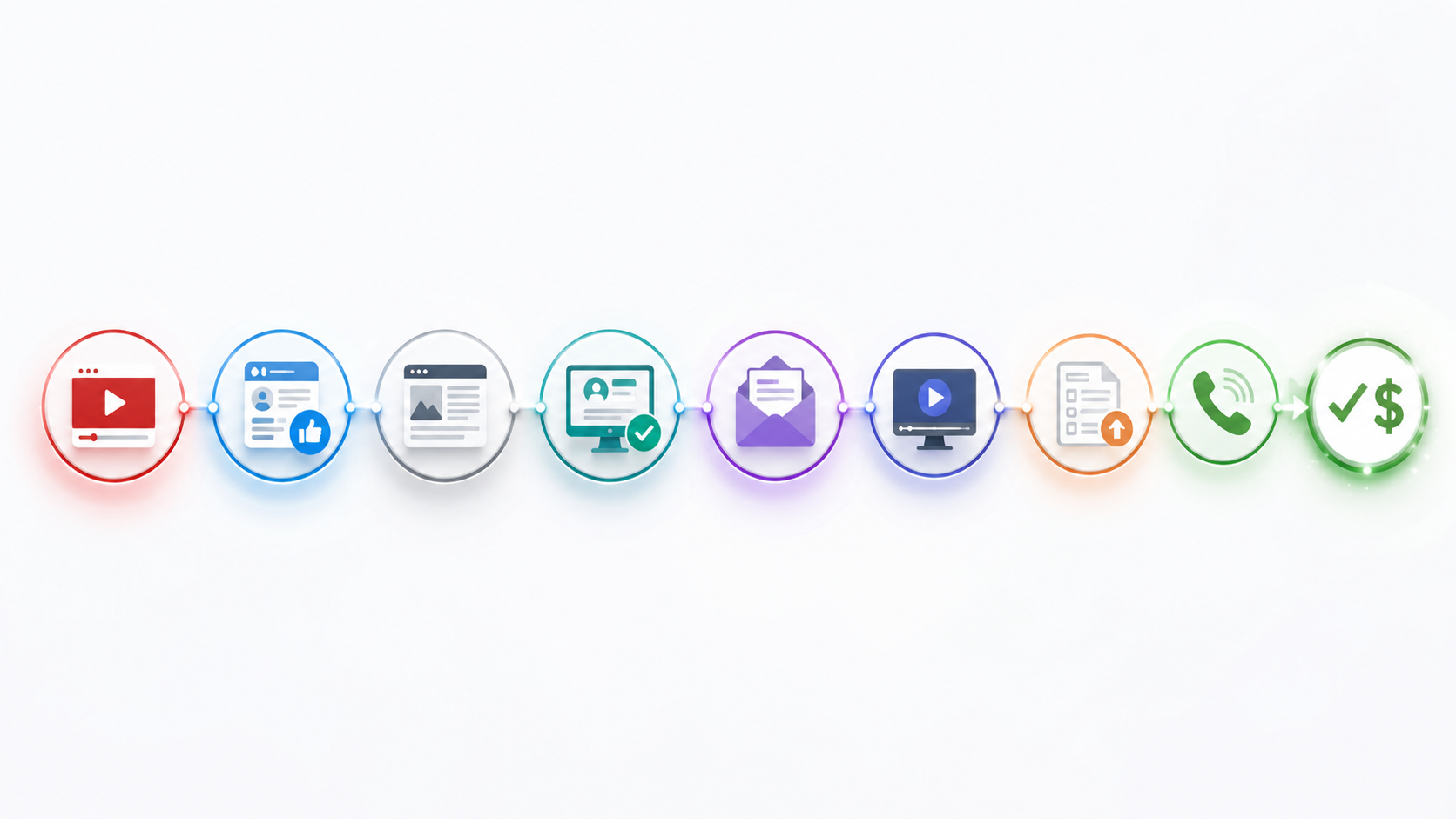
Facebook and Google pixels were designed for one scenario: someone clicks an ad and buys within a few days on the same device. That model works for e-commerce. It does not work for ad tracking for info products, where the purchase cycle looks like this: a prospect sees a YouTube pre-roll and does not buy. Days later, retargeting reaches them on Facebook. They register for a webinar. They watch the replay nine days later. An email sequence runs for two more weeks. They submit a coaching application. A sales call closes the deal.
That is a standard info-product funnel. Eight touchpoints across four channels over three weeks. Platform pixels see a fraction of it.
According to 2025 attribution research, 63% of marketers cannot accurately track activity between funnel stages.
The Multi-Touch Reality of Info-Product Funnels
 On mobile, iOS opt-in rates for cross-app tracking remain below 25% in most regions as of 2025, according to advertiser reporting analysis. iOS 17 added Link Tracking Protection in September 2024, stripping fbclid and tracking parameters from Safari Private Browsing URLs. The resulting attribution picture is structurally biased toward whatever channel handled the final click.
Attribution Windows That Were Never Built for Long-Cycle Buyers
Meta’s default attribution window is 7 days for clicks and 1 day for view-through. Google Ads defaults to 30 days. A prospect considering a $10,000 mastermind program may need 60 to 90 days from first exposure to purchase. When that sale converts outside the attribution window, the platform logs zero credit for every campaign that seeded the decision.
According to marketing attribution benchmark data from 2025, 54% of advertisers were still running flawed last-touch models in early 2025, and last-click models misallocate up to 40% of conversion credit to bottom-funnel channels.
The Real Cost of Incomplete Attribution at Scale
Misattribution at $5,000 per month is inconvenient. At $50,000 per month, it produces demonstrably wrong budget decisions on a recurring basis. At $200,000 per month, the cost of those decisions consistently exceeds the cost of fixing them.
Facebook Ads Manager shows 40-60% fewer conversions than actual sales data in many businesses. Meta has publicly acknowledged this, telling AdExchanger it improved iOS under-reporting from 15% to 8% of conversions going dark. By Meta’s own admission, a meaningful share of real conversions are still invisible.
What Misattribution Costs in Practice
The good ad that looks bad. A YouTube pre-roll runs for a high-ticket coaching program. The platform reports 0.8 ROAS after 30 days. The operator cuts it. A substantial portion of those prospects converted 45 days later via Google Search. The YouTube campaign was the first-touch driver. It is gone now.
The bad ad that looks good. A Facebook retargeting campaign catches prospects who were going to convert anyway. Platform reports 4.2 ROAS. The operator scales it. Budget increased. Return did not.
Businesses that switch from single-touch to multi-touch attribution see a 22% average increase in budget efficiency and a 27% reduction in wasted ad spend, according to 2025 attribution benchmarks.
Want to see what your attribution actually looks like? Book a free Hyros demo
What Advanced Ad Tracking Actually Tracks
Advanced attribution is not a better version of the pixel. It is a different architecture entirely: one built to identify the same buyer across sessions, devices, platforms, and timeframes.
The Full Customer Journey, Across Every Channel and Device
When a prospect clicks a Facebook ad on mobile Monday, reads a blog post on desktop Wednesday, watches a webinar replay on tablet Friday, and purchases on desktop the following Tuesday, ad tracking built for complex funnels connects all four interactions to the originating campaign. According to 2024 Demand Gen Report data, complex multi-touch purchases average 6 to 8 touchpoints before a buying decision.
Offline and Phone Conversions
For coaching programs and high-ticket masterminds, the conversion event is a phone call. Call tracking for high-ticket sales connects inbound calls and application submissions to the originating ad source, campaign, and keyword.
Long-Cycle Buyers and LTV Attribution
A coaching client who purchases a $5,000 program and later upgrades to a $25,000 mastermind represents $30,000 in attributed customer value. LTV attribution connects full customer lifetime value back to the originating acquisition source.
Why 7-Figure Operators Made the Switch
Marketers using attribution platforms are 2.3x more likely to increase ROAS year-over-year, and multi-touch attribution adopters see an average 19% ROI lift in the first year.
Tony Robbins Team: 43% Ad Spend Scaling in Six Months
The team managing Tony Robbins’ paid advertising implemented Hyros and scaled ad spend 43% for Business Mastery and over 100% for Unleash The Power Within within six months. The team publicly stated that Hyros revolutionized their decision-making process by providing full transparency across all ad tracking.
Alex Hormozi as a Named Public Endorser
Alex Hormozi, widely followed in the info-product and entrepreneurship space, is a named public advocate for Hyros. His stated position: among 100,000 or more active education businesses Hyros tracks, almost all of those doing over seven figures per month in revenue use the platform.
What the Results Have in Common
Both operators run at the scale where attribution errors have measurable dollar consequences. Review the client results for documented outcomes from operators at various spend levels. The framework behind scaling your ad spend is the same in every case: accurate data unlocks confident scale.
Frequently Asked Questions
How do 7-figure info businesses track their ads?
Seven-figure info businesses use multi-touch attribution platforms rather than native platform pixels. These platforms follow buyers across channels, devices, and long time windows, including phone closes and offline events that pixels cannot see. Hyros is purpose-built for this funnel type and is used by operators including Tony Robbins and Alex Hormozi.
What ad tracking software do course creators use?
At the seven-figure level, most info-product operators have moved beyond native platform pixels to multi-touch attribution platforms. The core requirement is a tool that can follow a buyer across channels, over weeks or months, through both online and offline conversion events.
Why does Facebook Ads Manager show the wrong ROAS for coaching businesses?
Facebook’s pixel tracks within a 7-day click or 1-day view window. It cannot see cross-device journeys, iOS-blocked conversions, offline purchase events, or conversions that happen weeks or months after first ad contact.
How do you track conversions in a webinar funnel?
Tracking webinar funnel conversions requires connecting every stage from ad click through registration, email follow-up, replay watch, application, and purchase to a single buyer identity. Advanced attribution platforms stitch the full journey together.
What is the difference between pixel tracking and AI attribution for info products?
Pixel tracking records that a conversion happened and credits the most recent ad platform interaction. AI attribution builds a model of the full customer journey, identifying the same buyer across devices, sessions, and timeframes, and assigns credit based on actual influence across all touchpoints.
Stop optimizing for what the platforms tell you. Start optimizing for what is actually driving revenue.
Book your Hyros demo or See how it works