
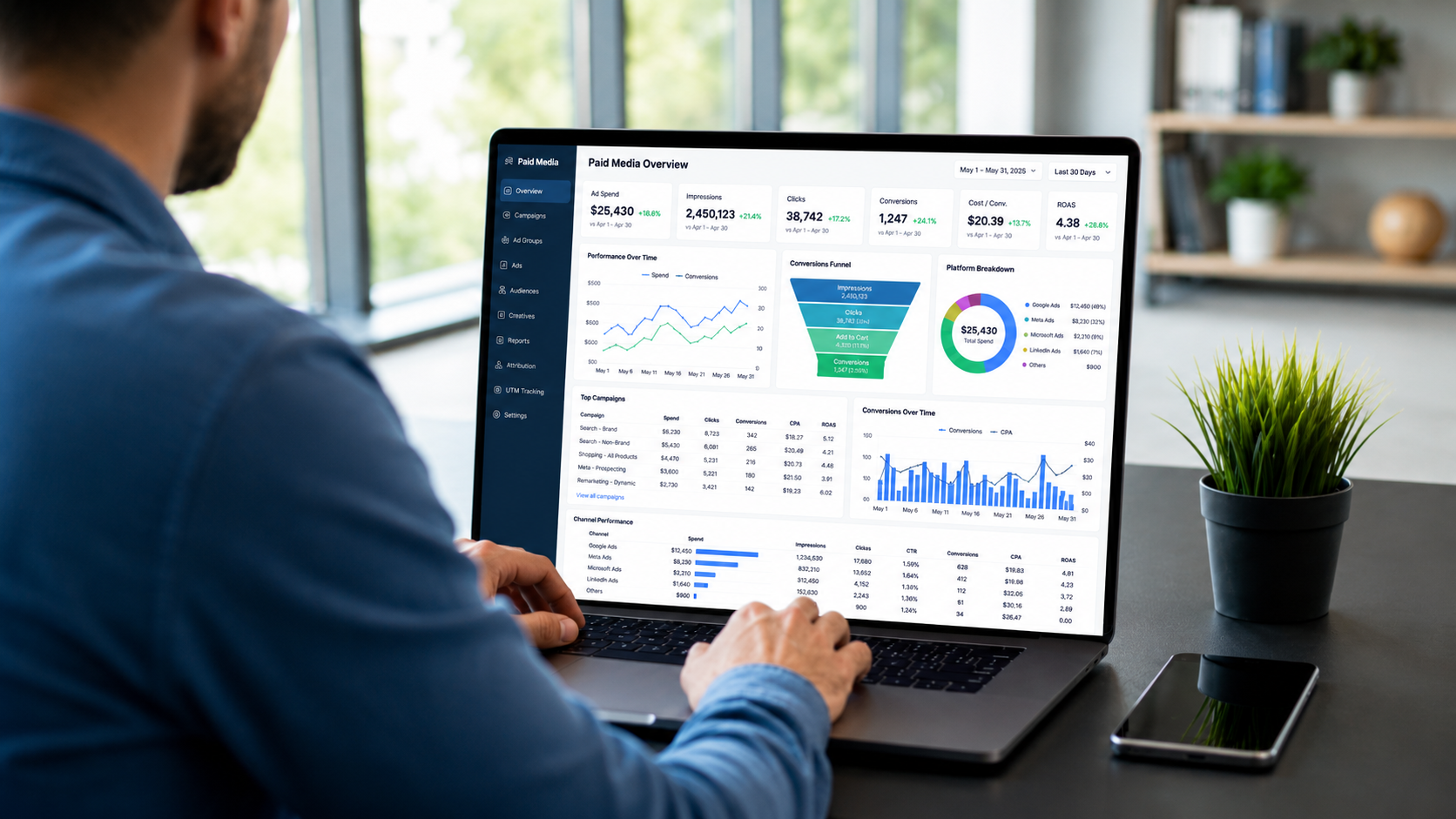
What is Hyros? The Complete Guide to AI-Powered Ad Tracking
Hyros is an AI-powered ad tracking and attribution platform that uses patented print tracking and server-side technology to match every customer to their true ad source, helping brands increase ad ROI by at least 15%.
Hyros is an AI-powered ad tracking and attribution software built for brands running paid traffic on Facebook, Google, YouTube, TikTok, and other ad platforms. The platform uses patented print tracking and server-side attribution to connect every sale, call, and signup back to the exact ad that generated it. Hyros customers include Tony Robbins, ClickFunnels, Playboy, Alex Hormozi’s Acquisition.com, and over 100,000 active education businesses.
The platform solves a problem that gets worse every year: ad platforms like Meta and Google cannot see what happens across devices, browsers, or long sales cycles. Hyros fills those gaps with first-party data, then feeds cleaner attribution signals back to ad platform AIs so campaigns target higher-quality buyers.
On average, brands applying Hyros tracking see at least a 15% increase in ad revenue.
Who Uses Hyros and Why?
Hyros serves performance marketers who spend enough on ads that a 10% to 15% lift in accuracy translates to meaningful revenue. The typical user runs Facebook, Google, YouTube, or TikTok ads and needs attribution the ad platforms cannot provide natively.
The platform supports four core business models:
- SaaS and software brands: Track demos, free trials, subscriptions, MRR, and LTV back to the ads that drove them.
- E-commerce brands: Track add-to-carts, sales, and COGS across Shopify and non-Shopify stores.
- Call-based businesses: Track call bookings, attendance, quality, and pipeline conversions.
- Info-product and education brands: Track course sales, coaching signups, and community memberships through complex funnels.
According to Tony Robbins’ ad team, Hyros allowed them to scale ad spend by 43% for Business Mastery and over 100% for Unleash The Power Within. Whop, which hosts over 100,000 active education businesses, reports that almost all seven-figure businesses on its platform use Hyros.
Hyros works best for brands spending $10,000+ per month on ads with a sales cycle longer than 24 hours.
How Does Hyros Track Ads Differently Than Facebook or Google Pixels?
Hyros tracks ads using server-side print tracking rather than browser-based pixels. Pixels run inside a visitor’s browser and break when that visitor switches devices, clears cookies, uses an ad blocker, or opens Safari with Intelligent Tracking Prevention. Server-side tracking runs on your server, which no browser or privacy feature can block.
The platform also uses what it calls “print tracking,” a patented method that matches users across touchpoints using a combination of identifiers rather than a single cookie. This means Hyros still sees a customer who clicked a Facebook ad on their phone Monday, watched a YouTube video on their laptop Wednesday, then bought after reading an email Friday.
Key Takeaway: Facebook and Google pixels report what their browser-based tracking can see. Hyros reports what actually happened.
What Features Does Hyros Offer?
Hyros offers five core feature categories built around attribution, optimization, and remarketing. Each feature connects to the platform’s central goal: get more accurate ad data, then use that data to grow revenue.
 AI Attribution: Tracks every customer and their lifetime transactions back to the original ad source, even years later.
- Ad Platform Optimization: Feeds cleaner conversion data to Meta, Google, and other ad platform AIs to improve targeting.
- Industry-Specific Metrics: Tracks metrics relevant to specific business models like MRR for SaaS or COGS for e-commerce.
- Native Ad Manager Integration: Places Hyros attribution inside your existing Facebook Ads Manager and Google Ads interface.
- AI Revenue Forecasting: Reads past and present data to forecast ROI months and years ahead.
The platform also includes Hyros AIR, an AI remarketing agent that recognizes anonymous website visitors, obtains their contact info from first-party data, learns what they’re interested in, and reaches out automatically. Brands using AIR report 3% to 7% more sales on top of baseline Hyros tracking gains.
Hyros positions attribution data as the fuel that makes ad platform AIs smarter.
How Much Does Hyros Cost?
Hyros uses tiered pricing based on ad spend and tracking volume, with plans starting in the range typical of enterprise attribution software. Exact pricing requires a demo call, which the company uses to match plans to business size and complexity.
The platform does not publish flat rates on its website because pricing scales with the number of ad platforms tracked, monthly tracked visitors, and whether you add the AIR remarketing agent. Most published customer case studies describe Hyros’s pricing as paying for itself quickly through recovered attribution and improved scaling decisions.
According to Sam Ovens, founder of Skool.com, “Everybody who uses it in my mastermind swears by it. The ROI increase from increased tracking accuracy outweighs the cost. It’s a simple math decision.”
For current pricing, you book a demo at hyros.com/pricing-ai-tracking.
How Do You Set Up Hyros?
Hyros setup runs through a 1-click AI installer that requires zero changes to existing ads, according to the company’s own product documentation. The platform connects to your website via a lightweight script, then links to your ad platforms through native API integrations with Facebook, Google, YouTube, TikTok, and others.
Standard setup steps include:
 Connect your ad accounts (Meta Ads Manager, Google Ads, TikTok Ads, YouTube).
- Install the Hyros tracking script on your website or funnel pages.
- Map your conversions (purchase, lead, call booking, demo).
- Verify tracking using Hyros’s built-in diagnostic tools.
- Turn on AI optimization to feed clean data back to ad platforms.
The platform is designed so marketers can complete setup without a developer for standard funnels. E-commerce stores on Shopify and custom platforms both receive dedicated onboarding paths.
Key Takeaway: Hyros setup takes minutes for standard funnels and requires no changes to live ad campaigns.
Is Hyros Worth It for Small Businesses?
Hyros is worth it for businesses spending at least $10,000 per month on paid ads with sales cycles longer than a single session. Below that spend level, the attribution improvements rarely offset the platform cost. Above that level, the 15% average revenue lift compounds quickly.
Small e-commerce stores running short-cycle Facebook ads often do fine with native pixels and Shopify reporting. Info-product businesses, SaaS brands, and call-based businesses almost always benefit because their customer journeys cross devices, sessions, and weeks, the exact scenarios where pixels fail.
A useful test: if you cannot confidently say which ad generated your last ten highest-value customers, Hyros solves that problem. If native pixel reporting already matches your Stripe or Shopify revenue within 5%, you probably don’t need it yet.
Hyros fits businesses that need attribution certainty to scale ad spend confidently.
Why Hyros Matters for Paid Advertisers in 2026
Hyros is an AI-powered ad tracking platform that uses server-side print tracking to match every sale to its true ad source, then feeds that data back to ad platforms to improve targeting and scaling decisions. Brands running serious paid media, from Tony Robbins to Alex Hormozi, use it because pixels miss too much data to scale profitably in 2026. If you spend meaningful money on ads and need attribution you can trust, Hyros belongs on your shortlist.
Ready to stop guessing? Get in touch with us today and we’ll show you how it works.
Frequently Asked Questions
What does Hyros actually do?
Hyros tracks every ad click, call, and conversion using server-side attribution and patented print tracking. It connects anonymous visitors to eventual customers across devices and months, then shows you which ads produced your highest-LTV buyers. The platform also feeds cleaner conversion data back to Facebook, Google, and other ad platforms so their AI targets better prospects.
Is Hyros better than Facebook Ads Manager reporting?
Hyros is more accurate than Facebook Ads Manager because it runs server-side and tracks across devices. Facebook’s in-platform reporting has been unreliable since the iOS 14 privacy update, often underreporting conversions by 20% to 40%. Hyros catches those missed conversions and reports them alongside Facebook’s data inside Facebook Ads Manager itself.
Can Hyros replace Google Analytics
Hyros replaces Google Analytics for ad attribution purposes but not for general website analytics. GA4 covers page-level traffic patterns, site behavior, and conversion funnels. Hyros covers ad-to-sale attribution, LTV tracking, and cross-device customer journeys. Most Hyros customers run both tools for their separate purposes.
How long does Hyros take to show results?
Hyros shows attribution differences within 48 to 72 hours of installation as new conversions start flowing through its tracking. Measurable ROI improvements typically appear within 30 to 60 days as ad platforms learn from the cleaner data Hyros feeds them. The 15% average revenue lift is usually reached within 90 days.
Does Hyros work for Shopify stores?
Hyros has a dedicated Shopify integration that tracks add-to-carts, checkouts, purchases, COGS, and lifetime value. It works alongside native Shopify analytics without conflicts. Setup takes minutes through the Shopify app store, and attribution data appears inside both the Hyros dashboard and your existing Facebook and Google Ads Managers.
Is Hyros GDPR compliant?
Hyros operates on first-party server-side tracking, which is generally more GDPR-friendly than third-party browser pixels. The platform provides consent management tools and data processing agreements for EU-based businesses. For specifics relevant to your jurisdiction, review the Hyros Trust Center at hyros.com/trust and consult a privacy lawyer.