

Hyros vs Northbeam: Ad Attribution Comparison (2026)
TL;DR
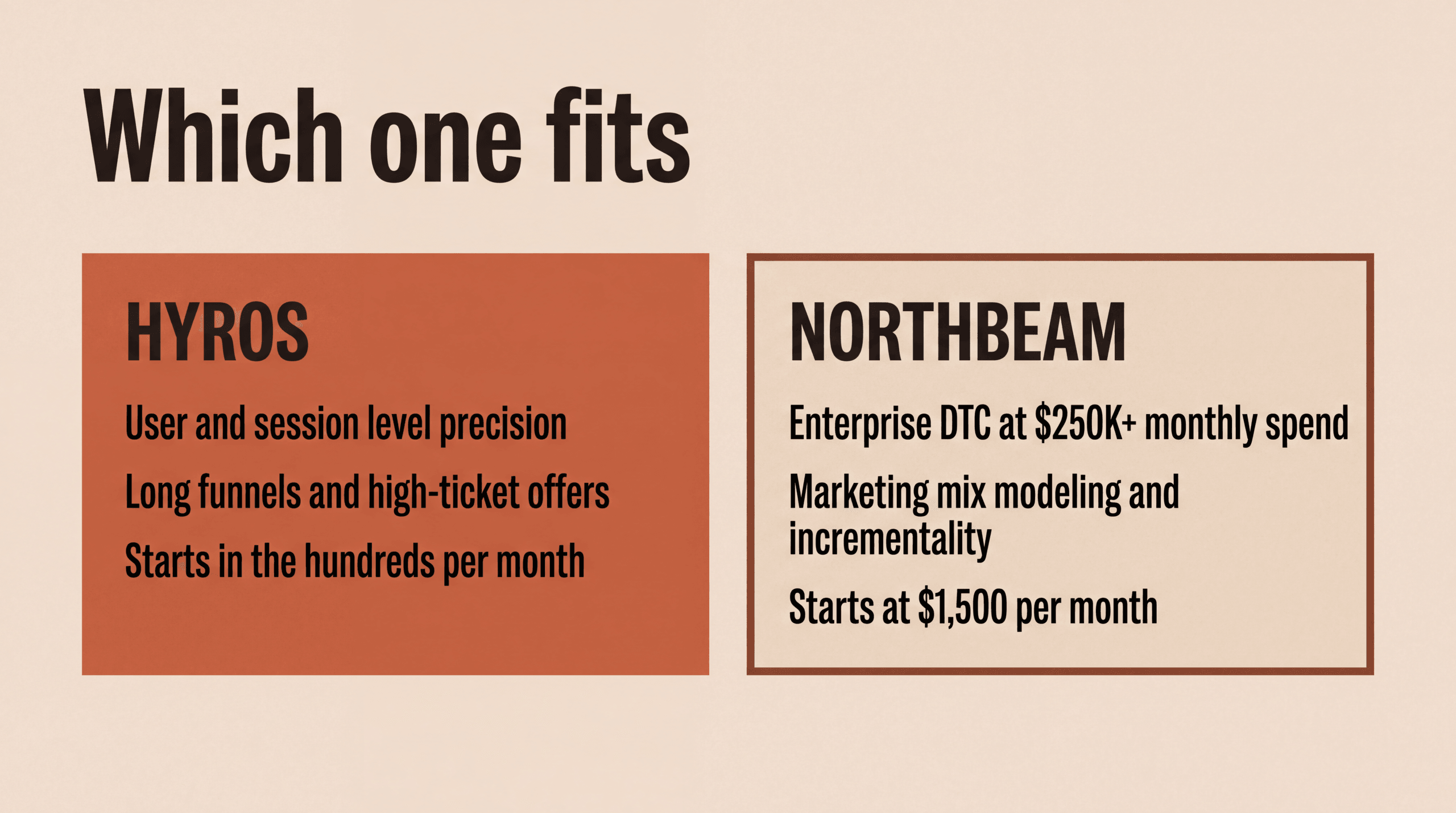
Hyros vs Northbeam is a choice between precision funnel attribution and enterprise media measurement science. Hyros is the stronger pick for info-product, coaching, agency, and complex DTC funnels that need long-window, server-side, user-level tracking without a dedicated analyst on staff. Northbeam is the stronger pick for mid-market and enterprise DTC brands spending $250K or more per month on ads that want multi-touch attribution, machine-learning marketing mix modeling called MMM+, and incrementality testing unified in one stack. Northbeam Starter begins around $1,500 per month and scales from there. Hyros Business pricing plans typically start closer to $230 to $379 per month quote-based and scale with tracked revenue. Hyros has 601 Trustpilot reviews at 4.8 as of April 2026. Pick Hyros for speed and precision. Pick Northbeam for warehouse-grade measurement depth.
What Are Hyros and Northbeam?
Look, most people frame this comparison as a feature checklist. They want to know which platform has better multi-touch, which one supports MMM, which one costs less. That’s the wrong question. The real question is whether you’re making ad decisions from data that lives outside the black box. Because Facebook’s going to take credit for the sale, Google’s going to take credit for the sale, and you’re not even going to see the real credit allocation when you need it. Both platforms are saying they got the sale. You can’t verify it. That’s the problem Hyros was built to solve, and it’s the same problem Northbeam is trying to solve from a different angle. Understanding that distinction matters more than anything in the feature table below.
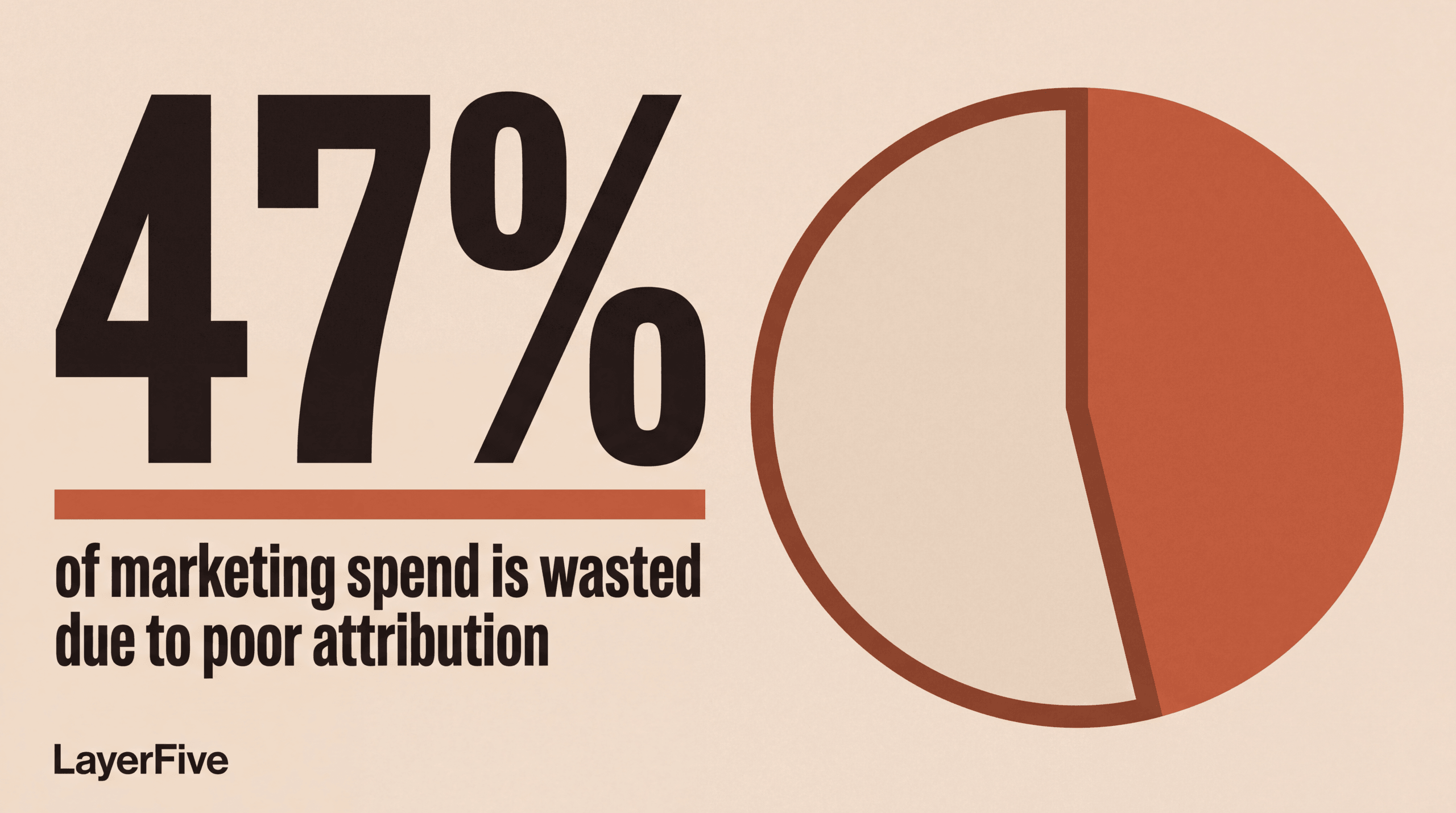
I built Hyros because I couldn’t scale my own ad accounts. Attribution was wrong, the platforms were lying to me, and I had no clean way to verify which dollars were actually working. What I found (and what I’ve seen confirmed across thousands of accounts on the platform since) is that if you’re operating on over-reported platform data, you’re not just making bad decisions: you’re actively inverting your optimization. You scale the losers and kill the winners. The wasted spend that flows from that misattribution runs 15 to 20 percent of total ad budget in the accounts I’ve reviewed. That’s not a rounding error. That’s 15 to 20 percent of your potential scale, gone. For a DTC brand running $500K per month, that’s $75K to $100K a month disappearing into channels that aren’t performing the way the dashboards say they are.
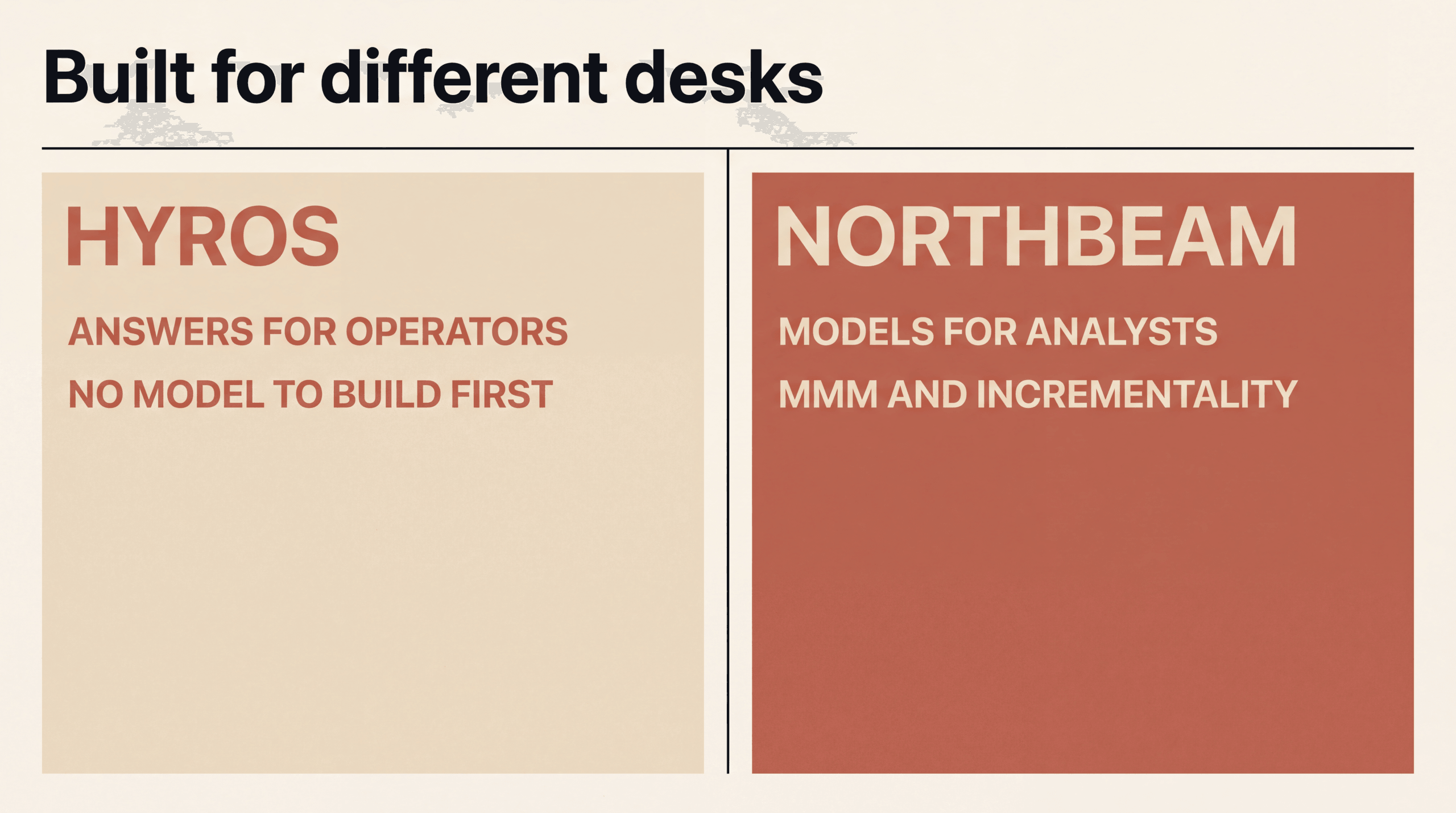
Hyros is a server-side ad tracking and attribution platform built for high-spend direct-response advertisers: info-product businesses, agencies, high-ticket coaches, and DTC brands that need precise, long-window, multi-funnel tracking without a dedicated data team on staff. Northbeam is an enterprise measurement platform for DTC brands spending $250K or more per month that want multi-touch attribution, machine-learning marketing mix modeling (MMM+), and incrementality testing unified in one stack. Both run server-side tracking. Both push enriched conversion data back to Meta, Google, and TikTok. The divergence shows up in who is expected to operate the tool and how deep the measurement layer goes. Hyros assumes a media buyer runs it, Northbeam assumes an in-house analyst does. That assumption shapes every pricing tier, every onboarding path, and every feature priority on both sides.
Verdict: Choose Hyros if you want fast-deploying precision server-side attribution for high-spend direct-response funnels without needing a data team; choose Northbeam if you are a mid-market or enterprise DTC brand with in-house analysts who need warehouse-grade raw data, MMM+, and incrementality testing unified in one measurement stack.
How Do Hyros and Northbeam Compare on Features?
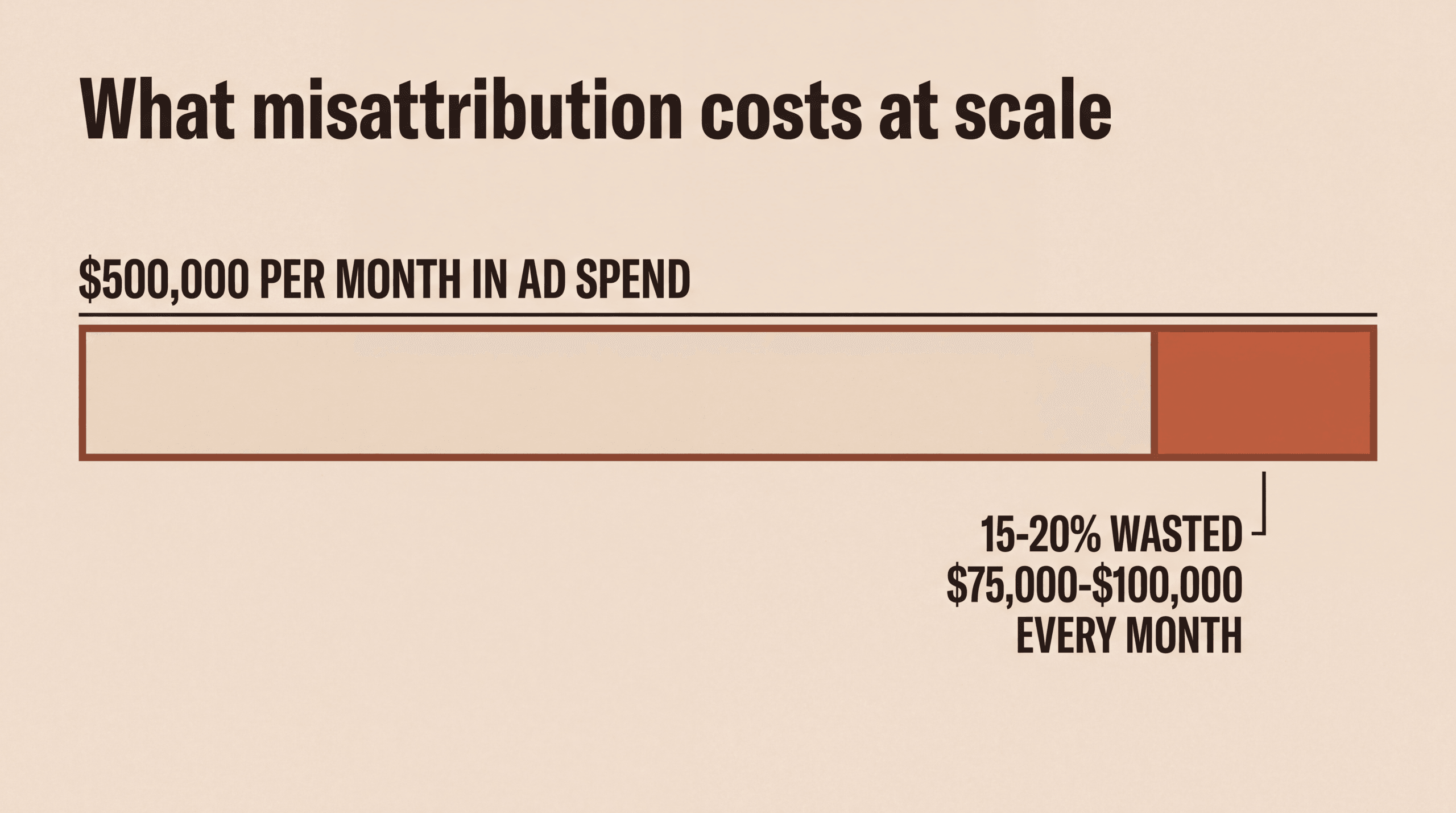
The feature surface area looks similar on paper. Both offer server-side tracking, both push enriched events to ad platforms, both support multi-touch attribution. The gap opens up around MMM, incrementality testing, raw data access, and who the tool was built to be operated by day to day. According to LayerFive, 47 percent of marketing spend is wasted due to poor attribution, so the specific gap each platform closes matters more than the feature list.
| Feature | Hyros | Northbeam |
|---|---|---|
| Primary use case | Precision funnel attribution for direct-response | Enterprise DTC media measurement |
| Server-side tracking | Yes | Yes |
| Multi-touch attribution | Yes | Yes (flagship) |
| Marketing mix modeling (MMM) | No | Yes (MMM+, retrains weekly) |
| Incrementality testing | Limited | Yes (Meta and Google launch) |
| Deterministic view-through credit | Limited | Yes (Clicks + Deterministic Views) |
| Long attribution windows | Yes (long / unlimited) | Yes (configurable) |
| Shopify integration | Yes | Yes |
| Info-product and funnel support | Yes (core strength) | Limited |
| High-ticket coaching / webinar funnels | Yes | Limited |
| Agency / multi-client support | Yes (core) | Yes (Starter plan) |
| CRM and long-cycle tracking | Yes | Limited |
| Creative analytics | Limited | Yes |
| Product analytics | Limited | Yes |
| Profit benchmarks | Limited | Yes |
| Metrics Explorer / custom dashboards | Partial | Yes |
| Apex ad-platform integration layer | No | Yes |
| Raw data warehouse access (columnar database / BigQuery export) | Limited | Yes |
| Minimum recommended ad spend | Works at $10K+/mo | Starter under $250K/mo; Pro at $250K+; Enterprise at $500K+ |
| Pricing model | Quote-based (tracked revenue) | Based on page views + data volume |
| Onboarding complexity | Low to medium | Medium to high (analyst team assumed) |
| Support model | VIP on all plans | Tiered by plan |
| Trustpilot reviews (April 2026) | 601 at 4.8 | Smaller public review footprint |
Four rows deserve extra attention.
First, marketing mix modeling. Hyros isn’t an MMM vendor and doesn’t pretend to be. Its product identity is precision tracking at the user, session, and funnel level (what Softailed’s independent review calls server-side tracking that “recovers 18 to 40 percent more conversions versus browser-only pixels”). Northbeam runs MMM+ as a flagship feature. The model retrains weekly, ingests the platform’s own MTA data, and produces channel-level spend recommendations that sit alongside last-touch and multi-touch reports. If your buying committee has already decided MMM is a requirement, Hyros is out and Northbeam is in. If MMM is a nice-to-have, Hyros stays on the list and the decision rotates back to funnel precision, support model, and cost.
Second, incrementality testing. Northbeam rolled incrementality testing out as the “third leg” of its measurement stool in 2025 to 2026, starting with Meta and Google. The tests run inside Northbeam instead of through a separate lift-study tool, which removes a classic reconciliation problem. Hyros supports lift analysis in a lighter fashion and isn’t built around structured incrementality testing as a daily workflow. For teams that see incrementality as a monthly planning input, Northbeam is the cleaner fit.
Third, raw data access. Northbeam is architected on columnar database with warehouse-grade export options and a Metrics Explorer for custom dashboards. Mature DTC analytics teams will use that access to build their own reports, feed internal BI tooling, and reconcile against payment processor data. Hyros exports are lighter by design because the assumed operator is a media buyer, not an analyst. For teams that want the tracking layer to stay inside the tool, Hyros is simpler. For teams that want to own the data downstream, Northbeam is the answer.
One data point that illustrates the precision gap between the two approaches: on the Hyros Shopify integration page, Hyros reports that Facebook underreports conversions by approximately 30 percent, Google by 29 percent, and TikTok by 33 percent compared to Hyros server-side tracking. An analysis by CheckThat.ai that aggregated 601 Trustpilot reviews found user-reported figures in the same 29 to 33 percent range. Northbeam doesn’t publish equivalent per-platform underreporting benchmarks. Its value proposition centers on the MMM+ and incrementality layer instead of raw conversion recovery.
Fourth, onboarding and operation complexity. Hyros is designed to be implemented by an operator and deliver usable numbers in days, not weeks. VIP support sits on every plan, which matters when a funnel launch is live and the tracking script breaks at 2am. Northbeam is closer to an enterprise analytics rollout. Implementations typically touch multiple pixels, events, and reconciliation passes, and mature Northbeam customers usually have a dedicated measurement lead or analyst pod. That is a feature, not a bug, for the buyer Northbeam was built for. It is a blocker for the buyer Hyros was built for.
How Does Hyros Pricing Compare to Northbeam?
Pricing current as of April 2026. Verify before purchase. Both vendors use quote-based pricing that changes. Northbeam uses page-view-based pricing plus data volume, so actual quotes vary by traffic profile.
| Plan | Hyros | Northbeam |
|---|---|---|
| Free tier | No | No |
| Entry paid | Business pricing ~$230-$379/mo (quote) | Starter from $1,500/mo (under $250K/mo ad spend) |
| Mid tier | Scales with tracked revenue | Professional for $250K+/mo ad spend (custom quote) |
| Enterprise | Custom quote | Enterprise for $500K+/mo ad spend, MMM+ available (custom quote) |
| Agency plan | Yes (custom) | Included in Starter |
| Organic-only plan | $49/mo (Organic tier) | No |
| Support at entry | VIP | Standard |
Third-party price aggregators and vendor pages point to a few concrete anchor points. Northbeam Starter begins at $1,500 per month and is positioned for advertisers spending less than $250K per month on ads. Northbeam Professional is expected at $250K or more in monthly ad spend. Northbeam Enterprise is expected at $500K or more in monthly ad spend and is the tier that unlocks MMM+. Hyros doesn’t publish a self-serve price list. Multiple third-party listings cite a $230 to $379 per month Business pricing entry range. Treat that as directional. Hyros pricing is always quote-based and scales with tracked revenue, number of funnels, and integration complexity.
The floor gap is the most visible difference. Hyros starts roughly seven to eight times cheaper than Northbeam at the entry tier. For context on whether the cheaper option still delivers, martech.zone documented one Hyros customer (Joshua Palmer of Direct Hearing) who saw a 14.44 percent revenue boost within five days of deploying Hyros AI optimization. That gap closes rapidly as spend scales. A brand running $300K per month in ad spend will pay thousands per month on either platform, and the headline entry price stops being the deciding factor. At that level the question becomes whether you need MMM+ and incrementality testing (Northbeam) or precision funnel tracking with VIP support on every plan (Hyros).
Northbeam’s page-view-based pricing model has a specific side effect. High-traffic DTC sites with relatively modest ad spend can end up quoted at the high end because the cost driver is data volume, not media budget. Low-traffic but high-AOV info-product funnels see the opposite. They can be cheap to track on a page-view model but fall outside Northbeam’s ideal-customer profile entirely. Hyros’s tracked-revenue model tends to behave more predictably across that spread.
The organic-only $49 per month Hyros plan has no Northbeam equivalent. It is a wedge product for content sites and brands that want Hyros tracking without committing to a paid-media stack. Treat it as unrelated to a head-to-head paid-media comparison with Northbeam.
For background on the underlying measurement approaches in this comparison, see what is ad attribution, the multi-touch attribution primer, and the MTA vs MMM breakdown.
Who Should Choose Hyros?
I’ve seen Northbeam shine for brands that already have a data analyst sitting inside the numbers every day. It’s genuinely impressive measurement infrastructure. But most of the operators I work with don’t have that person. They have a media buyer and a spreadsheet. For them, Northbeam’s onboarding timeline (weeks, not days) and its $1,500 per month floor create a problem before the product ever gets to prove itself. Hyros is what you pick when you need attribution running in a week, not a quarter, and when VIP support at 2am on a live launch is not negotiable.
Hyros is built for high-spend direct-response operators who treat attribution as mission-critical infrastructure, not a reporting layer. The profile has stayed consistent for years and is narrower than Northbeam’s.
- Info-product businesses, high-ticket coaching programs, and course creators running evergreen and launch funnels with webinars, email sequences, and multi-step checkouts.
- Agencies managing paid media for many clients across info-product, coaching, and DTC verticals where a single broken pixel across ten accounts is a real revenue event.
- DTC brands with non-standard checkouts, multi-step order bumps, subscription upgrades, or funnels that live outside a clean Shopify add-to-cart flow.
- Advertisers spending $10K to $500K or more per month that want funnel-level precision without hiring a dedicated measurement lead.
- Non-ecom advertisers running long sales cycles where attribution windows need to stretch well past the default 7 or 28 days.
- Operators who value VIP support with fast response times on every plan, not just at enterprise.
- Teams that have tried lighter-weight trackers, hit limits on long-window attribution or multi-funnel routing, and need a heavier tracking layer before scaling spend further.
The results from that profile are specific. According to Hyros, brands see at least a 15 percent increase in ad ROI on average, backed by a 90-day guarantee where you don’t pay if the lift doesn’t materialize. Named case studies reinforce the claim: Tony Robbins’ team scaled ad spend by 43 percent on Business Mastery and over 100 percent on Unleash The Power Within over six months. Dan Henry went from $20K to $300K per month in ad spend and reported a 300 percent increase in profitability. Media buyers on Reddit’s r/PPC community report ROAS improvements of 20 to 40 percent after implementing Hyros tracking, with one user running $100K per month in spend reporting a jump from 2.8x to 3.8x ROAS and 95-plus percent tracking accuracy after switching from Triple Whale.
Hyros is a weaker fit for buying committees that require MMM as a core input, DTC analytics teams that want to own raw warehouse-grade data downstream, or enterprise brands with a dedicated measurement lead who already has a columnar database or BigQuery pipeline. In those cases, the Hyros operator-first product identity works against the buyer’s internal workflow, not with it.
One recurring theme in Hyros accounts is that churn is low once the tracking layer is live. Switching attribution platforms mid-scale is operationally risky. Historical data doesn’t cleanly transfer. Reporting baselines reset. Every paid media decision runs through the new numbers for weeks while teams rebuild trust. High-spend accounts tend to stay, and that stickiness is visible in the 601 Trustpilot reviews at 4.8 as of April 2026. DTC examples like Legion Athletics (which reported 25 percent year-over-year Black Friday revenue growth on Hyros) and Tan Books (which hit 500-plus percent ROAS during BFCM 2023) show the platform works outside info-product verticals too.
Who Should Choose Northbeam?
Northbeam is built for mid-market to enterprise DTC brands with a dedicated measurement or analytics function. It assumes an analyst will sit inside the numbers daily, reconcile across pixels and warehouse data, and use MMM+ and incrementality testing as structured inputs to budget and channel planning.
- Mid-market and enterprise DTC brands spending $250K or more per month on ads, ideally with a dedicated measurement lead or analyst pod in-house.
- Teams that need MTA, MMM, and incrementality testing unified in one analytics stack instead of stitched together across three vendors.
- DTC operators who want Clicks + Deterministic Views for cleaner view-through credit assignment on platforms where click data is weak.
- Analytics-mature brands that plan to export raw event data into a warehouse for internal BI, finance reconciliation, or custom reporting.
- DTC brands ready to adopt weekly-retrained MMM+ forecasts as a channel-level budget allocation input instead of a quarterly one-off exercise.
- Operators who want creative-level, product-level, and profit-level reporting in the same tool that handles attribution.
- Teams with the onboarding appetite to run a medium-complexity implementation and the patience to let MMM+ calibrate over weeks.
Northbeam is a weaker fit for info-product businesses, high-ticket coaching programs, agencies managing paid media across many small accounts, or any brand under roughly $100K per month in ad spend. The $1,500 per month Starter floor prices out smaller advertisers before the conversation on capability fit even begins. Brands without an in-house analyst also struggle to extract the full value of MMM+ and warehouse-grade data, which is where the platform’s differentiation lives.
One public-facing advantage Northbeam offers is transparent positioning on measurement methodology. The vendor publishes content on MTA design, MMM theory, and the role of incrementality testing in a modern measurement stack. Buying committees doing formal vendor evaluation can map that methodology against their internal standards quickly, which shortens procurement cycles in enterprise environments.
For related comparisons, see the Hyros vs Triple Whale breakdown, the Hyros vs Wicked Reports comparison, the Hyros vs Rockerbox analysis, and the Hyros vs Cometly guide.
FAQ
Is Northbeam more expensive than Hyros?
At the entry tier, yes. Northbeam Starter begins at $1,500 per month. Hyros Business pricing plans typically begin near $230 to $379 per month quote-based. Once you reach $250K or more in monthly ad spend, Northbeam Professional becomes the expected tier. At that spend level both platforms cost thousands per month, and the decision shifts from price to capability fit. For advertisers under $100K per month in ad spend, Northbeam is usually out on price alone and Hyros remains a practical option.
Does Hyros offer marketing mix modeling (MMM) like Northbeam?
No. Hyros is a multi-touch attribution and ad tracking platform, not an MMM vendor. Its product identity is precision at the funnel and user level. Northbeam offers MMM+ as a flagship feature on its Enterprise plan, a machine-learning model that retrains weekly and ingests MTA data for channel-level spend recommendations. If your buying committee has decided MMM is a hard requirement, Northbeam is the correct choice between these two. If MMM is a nice-to-have, the decision opens back up.
Which tool is better for info-product businesses?
Hyros. It was built around long funnels, webinar sequences, email flows, multi-step checkouts, and high-ticket sales cycles. Those workflows are the core use case Hyros has been refined against for years. Northbeam is DTC-first. It lacks the deep funnel support info-product and coaching businesses rely on, and the $1,500 per month Starter floor is hard to justify for most info-product operators at entry.
Does Northbeam replace Google Analytics?
No. Northbeam is an attribution and measurement platform, not a general web analytics tool. Most Northbeam customers run it alongside GA4 or a similar analytics tool instead of replacing it outright. Hyros works the same way. Both platforms sit on top of the web analytics layer and focus on ad attribution, conversion enrichment, and, in Northbeam’s case, MMM and incrementality testing.
Can Hyros handle $500K or more per month in ad spend?
Yes. Hyros has well-documented customers running multi-million-dollar monthly ad budgets across direct-response, DTC, info-product, and agency accounts. The CEO of Regenalight reported scaling from $1M to $3M per month in revenue after using Hyros to identify $80K to $100K per month in wasted ad spend. The question at that spend level isn’t whether Hyros can track the volume. It is whether you need MTA plus MMM plus incrementality in one place (Northbeam) or precision funnel tracking across many accounts, channels, and long-window funnels with VIP support on every plan (Hyros). Both answers are defensible.
Can I run Hyros and Northbeam in parallel during evaluation?
Yes, and some enterprise DTC teams do exactly that. Running both trackers in parallel for two to four weeks on the same ad spend is the cleanest way to compare attribution outputs head to head. Expect minor differences in reported conversions because no two attribution platforms model touches identically. The goal isn’t to reconcile the numbers perfectly. It is to see which platform’s numbers sit closest to the ground truth reported by your payment processor, your CRM, and, if relevant, your warehouse.
Conclusion
Here’s the decision framework I actually use when someone asks me which platform they should pick. Two questions. First: do you have a dedicated analyst sitting inside your numbers every day, not a media buyer who checks dashboards, but someone whose full-time job is measurement? If yes, Northbeam is worth a serious look. It’s genuinely impressive infrastructure and the MMM+ layer is real. If no, stop there. You’re not the buyer Northbeam was built for, and you’ll pay $1,500 a month to use 20 percent of the platform.
Second question: do you need accurate attribution running in days, not a quarter? Because that’s my benchmark. Not feature lists, not pricing tables. I built Hyros because my own ad accounts couldn’t scale without clean data. What I found is that the operators who get the most out of it are the ones who stop optimizing ads and start optimizing the data layer underneath the ads. That’s where the 15 to 20 percent wasted spend lives. That’s where the losers are being scaled and the winners are getting cut.
Both platforms exist because the native platform numbers lie to you. Facebook’s going to claim that sale. Google’s going to claim that sale. Without a third-party server-side layer, you have no way to arbitrate and you’re making $100K per month decisions off a black box. That’s the problem. Both tools solve it. They solve it for different buyers at different price points with different team requirements.
My honest take after watching hundreds of operators go through this evaluation: the teams that pick Northbeam and actually get full value from it have an analyst, a warehouse, and the patience for a multi-week rollout. That’s a real buyer. But I talk to a lot of people who think they’re that buyer and find out they’re not after they’ve signed. The tip-off is always the same question: “how long until I see numbers?” If the answer needs to be “days,” you’re a Hyros account. It’s that simple.
Hyros fits high-spend direct-response operators, info-product brands, coaching businesses, agencies running multiple client accounts, and DTC brands with complex funnels and no dedicated analyst. Northbeam fits mid-market and enterprise DTC brands with a measurement lead, a warehouse, and a real infrastructure budget. Both are defensible choices for the right buyer. The only mistake is picking the wrong one for your team.
Book a Hyros demo to see how server-side attribution looks on your actual funnels before you commit. A 30-minute walkthrough on your live ad accounts is usually enough to decide whether the precision is worth the quote. Quotes scale with tracked revenue and funnel complexity. Get that conversation started before your next campaign launch.
Standalone Summary
Hyros is a server-side ad attribution platform built for high-spend direct-response operators (info-product businesses, agencies, high-ticket coaches, and DTC brands) that need precision funnel-level tracking without a dedicated data analyst on staff. Northbeam is an enterprise DTC measurement platform built for mid-market and enterprise brands spending $250K or more per month on ads, offering multi-touch attribution, weekly-retrained marketing mix modeling (MMM+), incrementality testing, and warehouse-grade raw data export via columnar database. The key architectural difference: Hyros is designed to be deployed and operated by a media buyer in days; Northbeam is designed for an in-house analyst team and takes weeks to onboard. Pricing reflects this split. Hyros Business pricing plans start near $230/month (annual) with VIP support on every plan, while Northbeam Starter begins at $1,500/month with standard tiered support. Hyros fits operators who need accurate numbers fast across complex funnels. Northbeam fits analytics-mature DTC brands that need MMM and incrementality testing unified in one stack and have the analyst capacity to operate it.
Related in This Series
Silo: Hyros Comparison Series
Other Hyros platform comparisons:
- Hyros vs Triple Whale: Ad Attribution Comparison (2026)
- Hyros vs Wicked Reports: Ad Attribution Comparison (2026)
- Hyros vs Rockerbox: Ad Attribution Comparison (2026)
- Hyros vs Cometly: Ad Attribution Platform Comparison (2026)
Also explore: