


Meta Ads Reporting and Attribution: What the Numbers Actually Mean in 2026
Most advertisers trust Meta’s reporting like it’s gospel. They pause campaigns when the dashboard goes red and scale when it goes green. That’s backwards. I’ve watched brands kill their best campaigns because Meta’s numbers said to, then wonder why revenue flatlined the next month. The dashboard and your bank account are not measuring the same thing. Attribution window cuts in January 2026, iOS signal degradation, and the structural incentives baked into platform-side measurement all drive a wedge between what Meta reports and what actually happened. This guide explains exactly how Meta Ads attribution works, what changed in 2026, where the reporting breaks, and how to get numbers worth making decisions on.
TL;DR
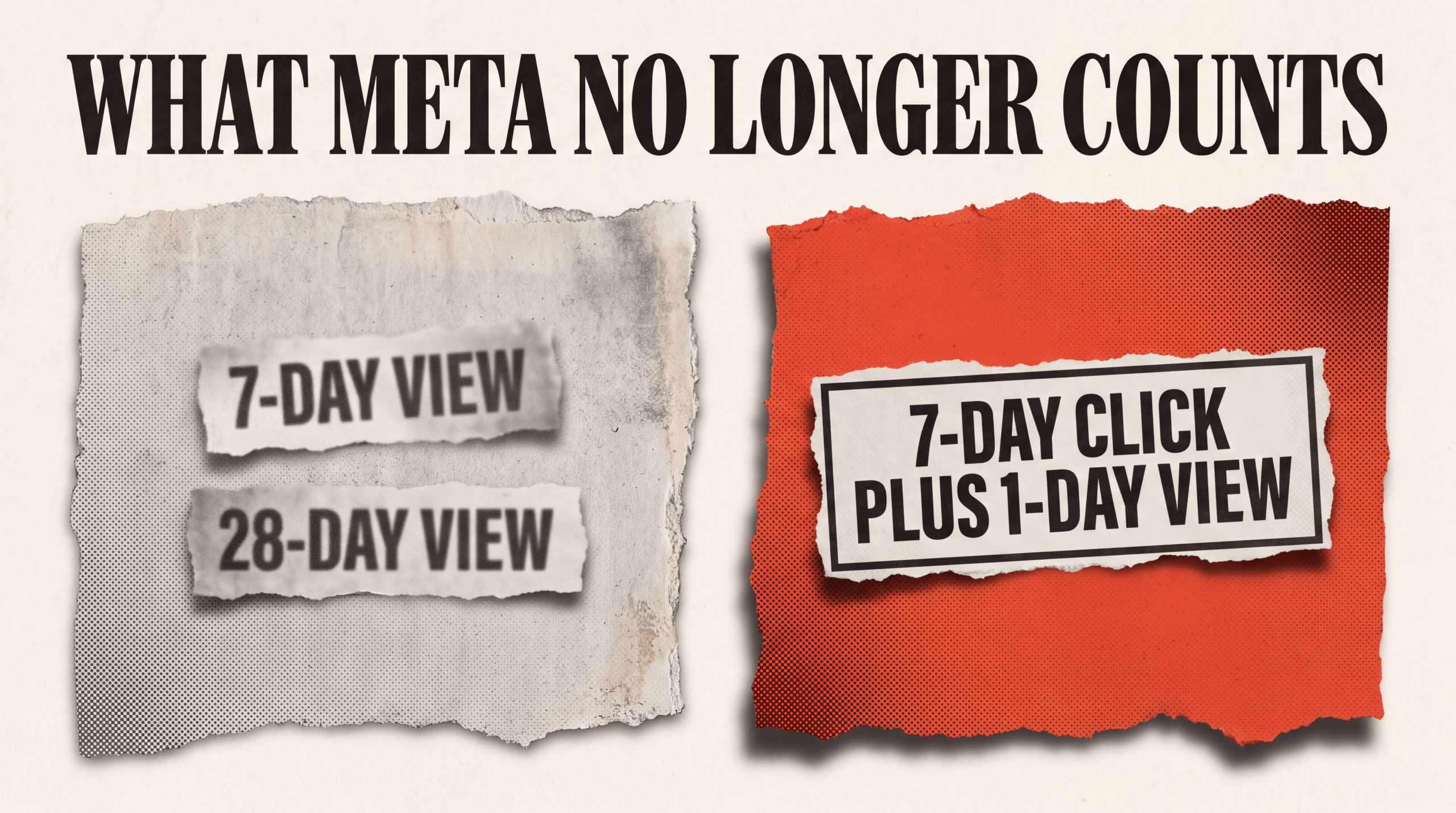
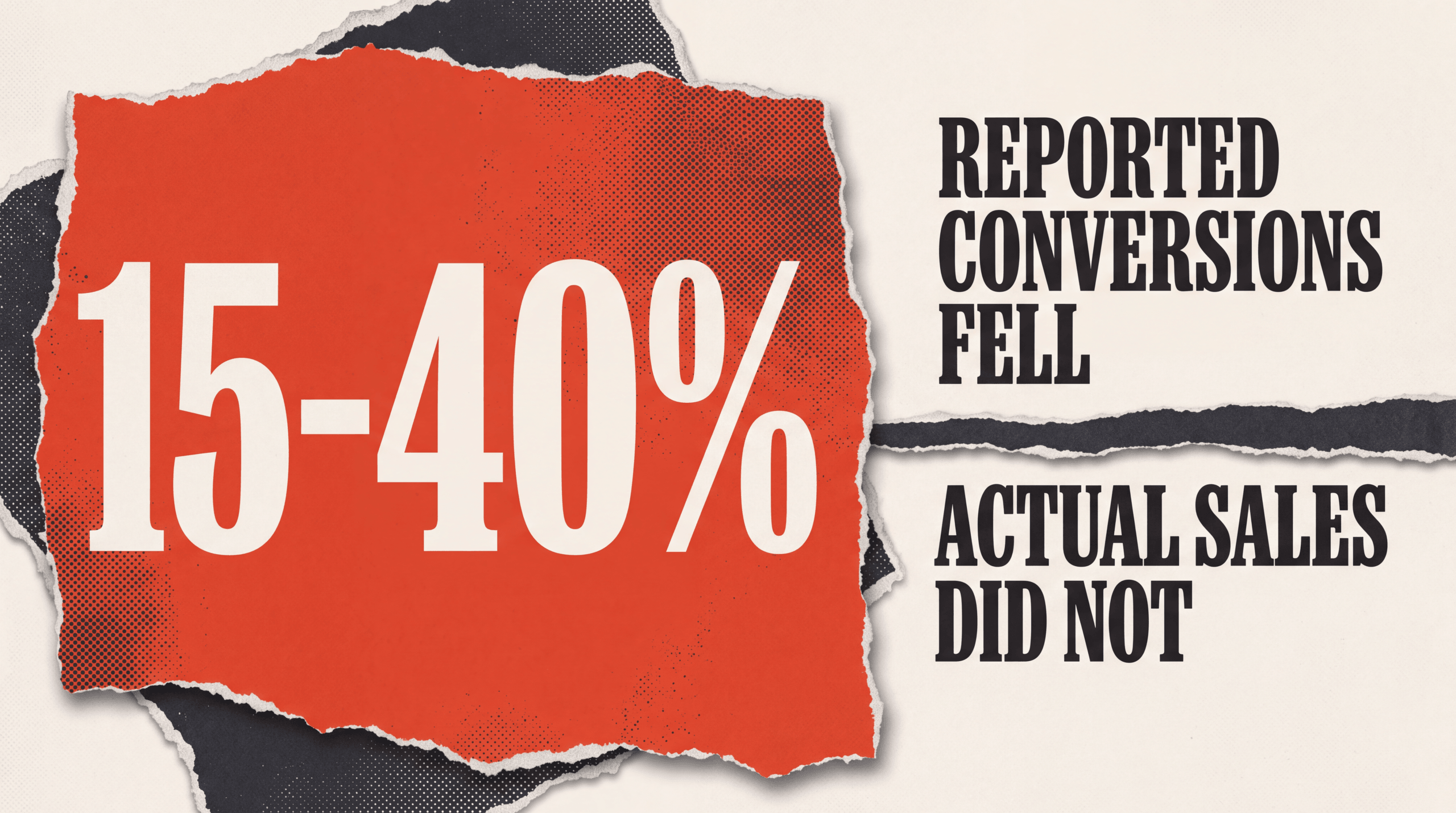
- Meta permanently removed 7-day view and 28-day view attribution windows on January 12, 2026. The standard attribution window is now 7-day click plus 1-day view. Advertisers saw reported conversions drop 15-40% overnight with zero changes to actual campaign performance. Conversions were still happening. Meta just stopped counting the ones outside its narrower window. B2B brands and businesses with longer sales cycles were hit hardest because 30-40% of their conversions came from that 8-28 day window.
- Meta also separated click-through and engage-through attribution in March 2026. Remarketing campaigns saw reported conversions decline meaningfully after this change, though the magnitude varied by baseline window choice, even though actual revenue stayed flat. The attribution is not wrong. It is just categorized differently. But it breaks historical comparisons and any automated rules tied to conversion volume thresholds.
- Combining Meta’s Conversions API (CAPI) with the Pixel is now the minimum standard for accurate tracking. Pixel-only tracking accuracy has dropped to roughly 40% or lower on iOS traffic. Adding CAPI raises measurement accuracy meaningfully above Pixel-only baseline and frequently reduces cost per acquisition within the first month, though magnitude varies by baseline Pixel coverage. Hyros goes further by providing independent, server-side attribution that operates outside Meta’s measurement system entirely, tracking conversions across all channels via independent first-party attribution (CheckThat.ai’s analysis found Hyros recovers 29-33% more conversions than platform-side reporting).
How Does Meta Ads Attribution Work?
Meta Ads attribution is the system Meta uses to connect ad impressions and clicks to downstream conversion events like purchases, leads, or app installs. When someone sees or clicks your ad and later takes a conversion action on your website, Meta’s system decides whether that conversion should be credited to the ad. The rules it uses (how long after an interaction it will still claim credit, and what types of interactions count) define your attribution window.
The mechanics work like this. Meta places a Pixel (JavaScript snippet) on your website that fires events when users take actions. It also receives server-side events through its Conversions API (CAPI). When a conversion event fires, Meta checks whether the converting user previously interacted with one of your ads within the active attribution window. If the user clicked an ad within the last 7 days or viewed an ad within the last 1 day (under the current default window), Meta credits the conversion to that ad.
This system has three foundational weaknesses. First, Meta can only track what it can see. If the Pixel does not load (ad blockers, browser restrictions) or the CAPI event does not match a Meta user, the conversion is invisible. Second, Meta has a financial incentive to claim credit for conversions because its business model depends on advertisers believing Meta ads work. Third, Meta cannot see interactions on other platforms, so it has no way to know that the customer also clicked a Google ad and an email before converting.
For a broader look at how attribution works across all platforms, see our guide on what is ad attribution.
What Attribution Windows Does Meta Offer?
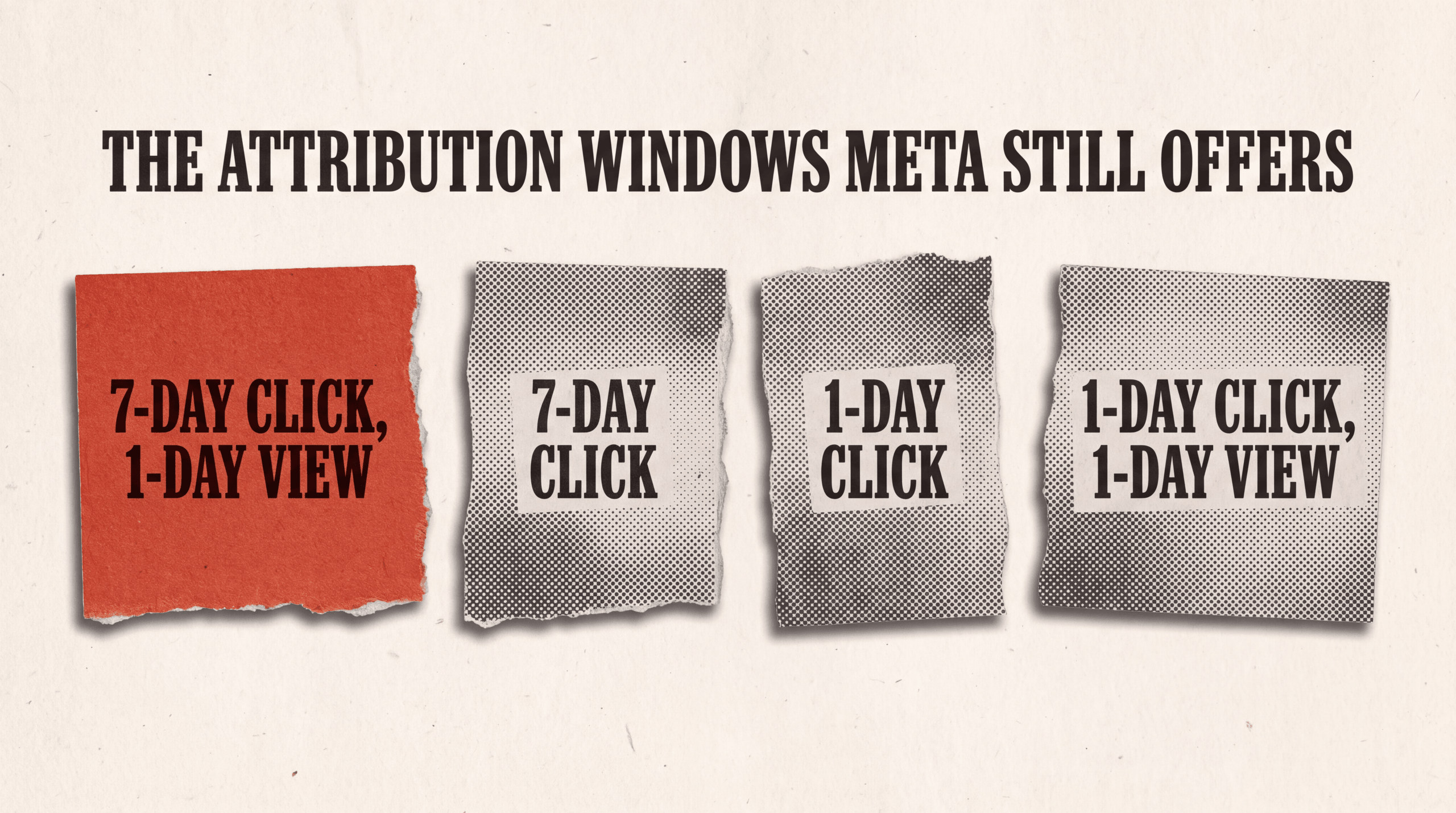
An attribution window defines how long after an ad interaction Meta will credit a conversion to that interaction. The available windows have shrunk sharply over the past five years.
Current Attribution Windows (April 2026)
| Window Setting | What It Means |
|---|---|
| 7-day click, 1-day view (default) | Conversions within 7 days of clicking an ad or 1 day of viewing an ad |
| 7-day click | Click-only, no view-through credit |
| 1-day click | Conversions within 1 day of clicking an ad only |
| 1-day click, 1-day view | Conversions within 1 day of either clicking or viewing |
What Was Removed on January 12, 2026
Meta permanently removed the 7-day view and 28-day view attribution windows from its Ads Insights API. These windows had been deprecated at the API level, but the January 2026 change made them fully unavailable, including for historical data queries. According to Dataslayer’s analysis, the deprecated API windows now return empty data silently, not an error message. Reporting tools that still reference these windows will show blanks or zeros without any warning that the data is missing.
The impact was immediate. Advertisers saw reported conversions drop 15-40% overnight. No campaign settings changed. No budgets shifted. The same ads running to the same audiences generating the same actual sales suddenly showed fewer conversions in the dashboard because Meta stopped counting the ones that fell outside the narrower window.
Industry data shows that some advertisers had 30-40% of conversions coming from that 8-28 day window that no longer counts. B2B businesses with 2-4 week sales cycles were hit hardest. A SaaS company where the average prospect takes 18 days from ad click to demo booking lost visibility into the majority of its conversions.
The March 2026 Click-Through vs. Engage-Through Split
In March 2026, Meta separated “click-through” and “engage-through” attribution into distinct categories. Previously, any interaction (including video views, carousel swipes, and other engagement actions) was grouped into a single attribution bucket. After the split, only direct link clicks count as click-through. Other engagements are categorized as engage-through.
The effect on remarketing was severe. Remarketing campaigns saw reported conversions decline meaningfully after this change, though the magnitude varied by baseline window choice, even though actual revenue stayed the same. The conversions did not disappear. They were recategorized. But for advertisers running automated rules (pause campaigns below X conversions, scale campaigns above Y ROAS), the sudden drop triggered incorrect actions. Campaigns that were profitable got paused because the dashboard said otherwise.
Why Attribution Windows Matter for Budget Decisions
Your attribution window directly affects three things:
Reported ROAS. A shorter window attributes fewer conversions to your ads, making ROAS look worse. The same campaign that showed a 4x ROAS under a 28-day click window might show a 2.5x ROAS under a 7-day click window. The actual sales did not change. Only the measurement did.
Campaign optimization. Meta’s algorithm uses attributed conversions to learn which audiences, placements, and creatives work. When the window shrinks, the algorithm loses visibility into late-converting users. It cannot learn from patterns it cannot see. Over time, this degrades optimization quality because the algorithm underweights ads that excel at driving considered, delayed purchases.
Scaling decisions. If your Meta dashboard says a campaign has a 2x ROAS and your actual accounting shows 4x, you will underinvest. You will cut budget from campaigns that are working because the reporting says they are not. According to LayerFive, nearly half of marketing spend is wasted due to poor attribution. A big piece of that waste comes from killing campaigns based on incomplete measurement.
Let’s imagine you’re running a B2B SaaS offer where your average prospect takes 18 days from first ad view to booking a demo. Under the old 28-day click window, those conversions showed up in Meta’s dashboard. After January 2026, they vanish. Meta still ran the ads. Your sales team still closed the deals. But the dashboard now reports a 1.4x ROAS on a campaign that’s actually printing 4x. You pause it. Revenue drops. Your team blames creative fatigue. The actual problem was a measurement gap created by a policy change you didn’t know happened.
For more on how ROAS calculations interact with attribution accuracy, see our guide on how to calculate ROAS.
How Does the Meta Pixel Work in 2026?
The Meta Pixel is a JavaScript snippet installed on your website that fires events when users take actions. It captures page views, add-to-carts, purchases, leads, and custom events. When a user who previously clicked or viewed your Meta ad triggers one of these events, the Pixel reports the conversion back to Meta.
The Pixel has been degraded by three forces:
iOS App Tracking Transparency. Apple’s ATT framework launched in April 2021 and gave iPhone users an explicit opt-in prompt for cross-app tracking. In the months following iOS 14.5, roughly 96% of US iPhone users initially opted out of tracking (Flurry Analytics, 2021), though opt-in rates have since climbed to approximately 35-37% (Adjust, Q2 2025). Meta’s attribution window collapsed from 28 days to 7 days as a direct result. The impact continues: Meta Ads, running on platforms where the majority of engagement happens on mobile, lost massive amounts of conversion signal.
Ad blockers. Over 30% of desktop users run ad-blocking extensions that prevent the Meta Pixel from loading. Those users’ conversions are invisible to Meta’s tracking. A customer who clicks a Meta ad, completes a purchase, and pays you $500 generates zero conversion data if their ad blocker prevented the Pixel from firing.
Safari ITP. Safari’s Intelligent Tracking Prevention caps JavaScript-set cookies to 7 days (24 hours in some configurations). A customer who clicks your Meta ad on Safari, browses your site, and returns 10 days later to buy will not have their conversion attributed to the ad. The cookie expired.
The combined effect is stark. According to DOJO AI, stores running only Pixel tracking typically see attribution accuracy drop to around 40% or lower. That means more than half of actual conversions never get reported back to Meta. Your ROAS dashboard shows a fraction of reality.
What Is the Meta Conversions API (CAPI)?
The Meta Conversions API is a server-side event transmission pipeline. Instead of (or in addition to) the Pixel firing events from the user’s browser, CAPI sends event data directly from your server to Meta’s servers via HTTP POST requests. This bypasses ad blockers, cookie restrictions, and browser-based tracking limitations entirely.
How CAPI Works
When a conversion event occurs on your website (purchase completed, lead form submitted), your server sends the event data to Meta’s CAPI endpoint. The data includes:
- Event name (Purchase, Lead, AddToCart)
- Event time
- Event value (revenue)
- Hashed customer identifiers (email, phone number, IP address)
- The click ID (fbclid) if available
Meta receives this data server-side and matches it against its user database using the hashed identifiers. If it finds a match to a user who previously interacted with one of your ads, it credits the conversion.
CAPI + Pixel: The Current Standard
Meta recommends running CAPI alongside the Pixel, not as a replacement. When both systems are active, Meta receives events from two sources and deduplicates them using event IDs. This redundancy catches conversions that either system alone would miss.
The performance improvement is significant. When CAPI is paired with the Pixel, attribution accuracy rises above the roughly 40% baseline seen with Pixel alone. According to wetracked.io, this frequently reduces cost per acquisition within the first month, though magnitude varies by baseline Pixel coverage. Not because the ads got better. Because Meta’s algorithm received more complete data and could optimize better.
Event Match Quality
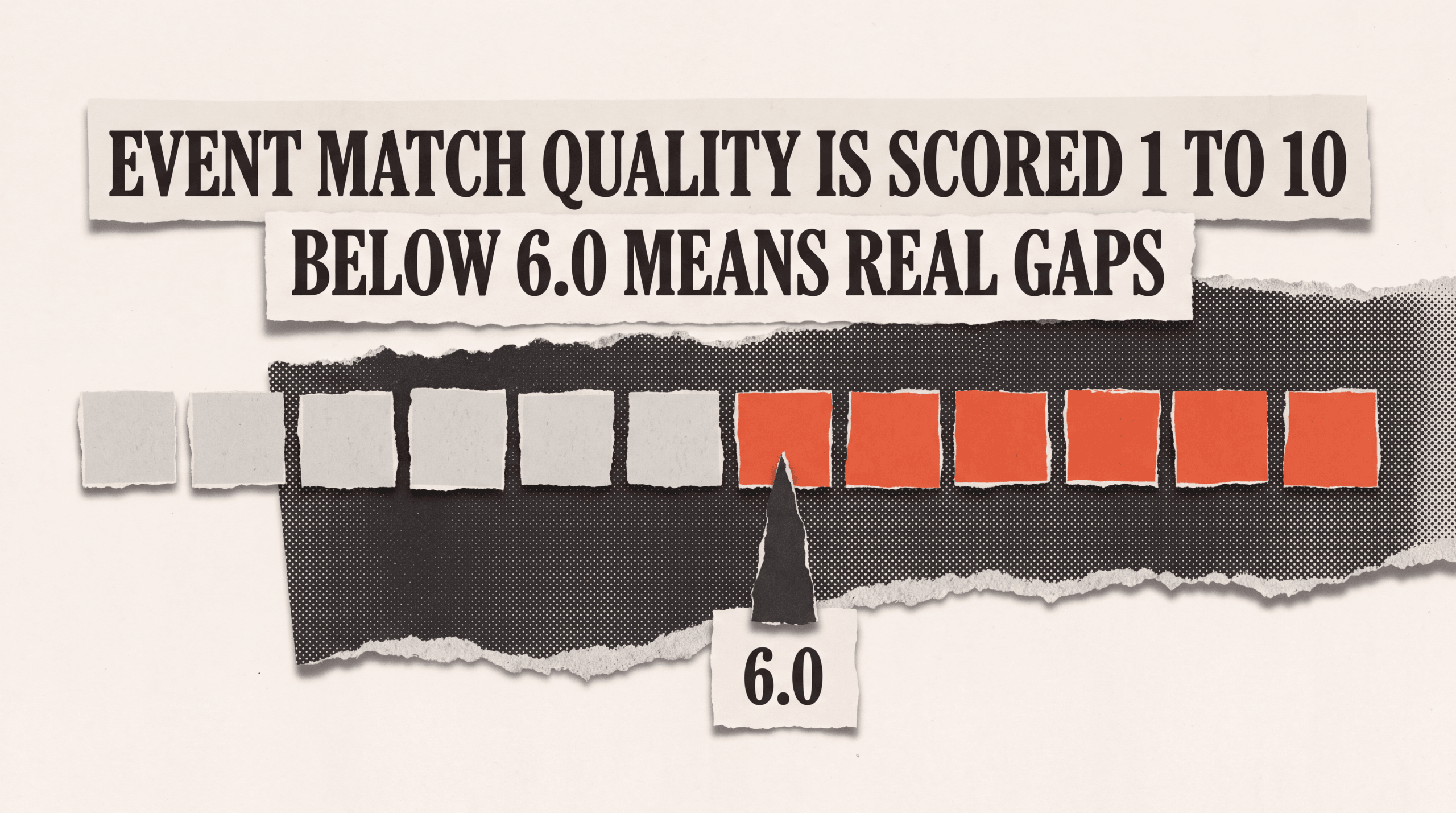
CAPI effectiveness depends on your Event Match Quality (EMQ) score, which measures how well Meta can match your server-side events to Meta users. Meta rates this on a scale of 1-10.
| EMQ Score | Meaning |
|---|---|
| Below 6.0 | Poor: significant attribution gaps, CAPI is underperforming |
| 6.0-7.0 | Acceptable: room for improvement |
| 7.0-8.0 | Good: strong matching rates |
| Above 8.0 | Excellent: near-complete event matching |
You improve EMQ by sending more matching parameters: hashed email, hashed phone number, IP address, user agent string, and the fbclid click identifier. According to DOJO AI’s analysis, advanced matching can improve EMQ scores by 10-30%. Every point of improvement translates into more conversions attributed, better optimization signal, and lower CPAs.
Despite its benefits, CAPI adoption has plateaued at mid-market brands per DOJO AI’s reporting. Many smaller advertisers still rely on Pixel-only tracking, which means they are operating on less than half of their actual conversion data.
Where Does Meta Ads Reporting Break?
Even with CAPI and the Pixel running together, Meta Ads reporting has structural limitations that produce inaccurate numbers.
Self-Reporting Bias
Meta reports its own performance. It has a structural incentive to show that Meta ads work because its revenue depends on advertiser spend. This does not mean Meta fabricates data, but it does mean the system is designed to claim credit whenever it reasonably can.
A customer who sees a Meta ad, clicks a Google ad, reads an email, and then buys will have that conversion claimed by all three platforms. Meta sees the impression and claims it. Google sees the click and claims it. Your email platform sees the open and claims it. The total reported conversions across platforms exceed actual conversions by 150-250%, according to Databox research. This is not fraud. It is a measurement architecture problem that every walled-garden platform shares.
Reporting-Optimization Disconnect
A critical detail that many advertisers miss: the January 2026 attribution window changes affected reporting, not delivery. Meta’s ad delivery algorithm still optimizes campaigns using broader signal windows internally. The conversions that disappeared from your dashboard did not disappear from the algorithm’s learning set. Meta’s machine learning still factors in those signals for bid optimization.
This creates a paradox: your campaigns may be performing well (and Meta’s algorithm knows it), but your dashboard says they are underperforming. If you make budget decisions based on the dashboard alone, you will cut campaigns that Meta’s own algorithm considers successful.
CRM Mismatch
A common experience after the 2026 changes: Meta shows 32 conversions while your CRM shows 50. Meta shows $10,000 in revenue while Shopify shows $15,000. These gaps exist because Meta can only attribute conversions it can track within its narrower window. The conversions are real. Your CRM proves they happened. Meta just cannot see them.
The fix is not to trust Meta’s numbers less. Add an independent measurement layer that sees everything Meta cannot.
Cross-Device and Cross-Platform Gaps
Meta tracks users primarily through the Meta user ID. When a user is logged into Facebook or Instagram across devices, Meta can connect interactions across those devices. But when the user clicks an ad on mobile and later converts on a desktop where they are not logged into Meta, the conversion may not be attributed.
This is compounded by the cross-platform problem. If the customer’s journey included Google Ads, TikTok, email, podcasts, or word-of-mouth, none of those touchpoints exist in Meta’s data. Meta cannot give credit to a Google search that happened between the Meta ad view and the purchase. It either claims full credit or attributes nothing.
For a deeper look at cross-platform attribution challenges, see our guide on multi-touch attribution.
How Does Hyros Fix Meta Ads Reporting Gaps?
I built Hyros because I hit this exact wall in my own businesses. Meta was showing numbers that looked fine. My accounting said something different. I couldn’t scale because I didn’t know which campaigns were actually driving revenue and which were just claiming credit. Hyros addresses Meta Ads reporting limitations by providing independent, server-side attribution that operates completely outside Meta’s measurement system.
Independent Measurement
Hyros does not rely on Meta’s Pixel, CAPI, or attribution windows to determine whether a Meta ad drove a conversion. Instead, Hyros tracks users through first-party identifiers (email, phone number) and server-side events. When a user clicks a Meta ad, Hyros captures the click. When they convert (whether that is 3 days, 30 days, or 90 days later), Hyros matches the conversion to the original click using deterministic identity matching.
This means the January 2026 attribution window changes have zero impact on Hyros tracking. Hyros does not use Meta’s windows. It tracks the full customer journey regardless of how long it takes.
Accurate Revenue Attribution
According to data published on the Hyros Shopify integration page, Facebook underreports conversions by approximately 30% compared to server-side tracked data. An independent analysis by CheckThat.ai that aggregated 601 Trustpilot reviews found users consistently reporting 29-33% more conversions tracked versus native platform numbers.
For a DTC brand spending $100,000 per month on Meta Ads, a 30% reporting gap means approximately $30,000 worth of conversions are invisible in the Meta dashboard. Those conversions are still happening. Your Stripe account shows the revenue. But Meta does not know about them, which means the algorithm cannot learn from them, which means your campaigns are optimizing on incomplete data.
Corrected Signal Back to Meta
Hyros sends corrected conversion data back to Meta through CAPI, enriching Meta’s optimization signal with conversions its own tracking missed. This is the mechanism behind Hyros’s AIR (AI Optimization) feature. According to Hyros, brands using AIR see 3-7% more sales from the improved algorithm signal.
The practical impact shows up in case studies. According to a published Hyros case study, Regenalight discovered that $80,000-$100,000 per month in ad spend was going to campaigns producing zero return. After fixing the allocation based on Hyros data, the company grew from $1M to $3M per month in revenue in a single quarter.
Dan Henry became 300% more profitable within 72 hours of implementing Hyros and scaled from $20,000 to $300,000 per month in ad spend. That level of scale requires knowing exactly which campaigns and creatives are driving real revenue, and Meta’s own reporting could not provide that data at that resolution.
For a comparison of how Hyros stacks up against other attribution tools for Meta advertisers, see Hyros vs Triple Whale and the best attribution tools roundup.
How Should You Configure Meta Ads Reporting for Accuracy?
Getting the most accurate data possible from Meta requires layering multiple tracking and measurement approaches. Here is the recommended setup in 2026.
1. Run CAPI + Pixel Together
This is non-negotiable. Pixel-only tracking misses 60% or more of conversions on iOS traffic. Set up CAPI through your platform’s native integration (Shopify, WooCommerce) or a server-side tag manager. Ensure event deduplication is active to prevent double-counting when both systems capture the same event.
2. Optimize Event Match Quality
Check your EMQ score in Meta Events Manager. Target 7.0 or higher. Send all available matching parameters: hashed email (required), hashed phone number, external ID, IP address, user agent, fbclid, and fbc/fbp cookies. Each additional parameter increases the match rate.
3. Use the Right Attribution Window for Reporting
After the January 2026 changes, the default 7-day click, 1-day view window is the broadest available option. Use it. But understand that this window will undercount conversions for any business with a sales cycle longer than 7 days.
4. Compare Against Source-of-Truth Data
Your source of truth is your payment processor (Stripe, PayPal, Shopify orders), not Meta’s dashboard. Build a weekly reconciliation process: total actual revenue from your payment processor minus total Meta-reported revenue equals your attribution gap. Track this gap over time. If it is growing, your tracking is degrading.
5. Add Independent Attribution
For advertisers spending $30,000 or more per month on Meta Ads, an independent attribution platform like Hyros provides the measurement layer Meta cannot. Hyros tracks conversions that fall outside Meta’s windows, connects cross-device journeys, and provides a single source of truth across all channels. Media buyers on Reddit’s r/PPC community report ROAS improvements of 20-40% after implementing Hyros tracking, with several users noting 90-97% attribution match rates when compared against backend data.
FAQ
Why did my Meta Ads conversions drop in January 2026?
Meta permanently removed the 7-day view and 28-day view attribution windows on January 12, 2026. If your previous attribution setting included view-through windows longer than 1 day or click windows longer than 7 days, your reported conversions dropped because Meta stopped counting conversions outside those narrower windows. Your actual sales did not change. Only the measurement changed. Check your payment processor to verify actual revenue.
What is Meta CAPI and do I need it?
Meta Conversions API (CAPI) is a server-side event transmission system that sends conversion data directly from your server to Meta. It bypasses ad blockers, cookie restrictions, and browser tracking limitations. In 2026, CAPI is essential. Not optional. Pixel-only tracking accuracy has dropped to around 40%. With CAPI alongside the Pixel, accuracy rises above that Pixel-only baseline, and advertisers frequently see lower cost per acquisition within the first month, though magnitude varies by baseline Pixel coverage.
How do I check my Event Match Quality score?
Go to Meta Events Manager, select your Pixel, and look for the Event Match Quality column next to each event (Purchase, Lead, AddToCart). A score below 6.0 means significant attribution gaps. Improve it by sending more hashed customer data through CAPI: email, phone number, IP address, user agent string, and the fbclid parameter.
Why does Meta show different numbers than my Shopify dashboard?
Meta attributes conversions based on ad interactions within its attribution window. Shopify records all actual sales. The gap comes from three sources: conversions that happened outside Meta’s attribution window, conversions from users whose tracking was blocked by ad blockers or ITP, and conversions that Meta cannot match to a specific ad interaction. The Shopify number is closer to reality. Meta’s number is an estimate based on what it can see.
Is Meta overcounting or undercounting my conversions?
Both. Meta overcounts by claiming credit for conversions that were influenced by other channels (Google, email, organic). It undercounts by missing conversions where tracking was blocked or cookies expired. The net effect depends on your business. For most DTC brands, undercounting dominates. Meta reports fewer conversions than actually occurred because of iOS privacy restrictions and ad blockers. Running CAPI helps close the undercounting gap. An independent attribution platform is needed to fix the overcounting.
How does Hyros compare to Meta CAPI?
CAPI and Hyros solve different problems. CAPI improves Meta’s own tracking by adding a server-side event pipeline alongside the Pixel. It helps Meta see more of your conversions. Hyros provides independent attribution that does not rely on Meta’s measurement at all. Hyros tracks conversions across all channels, matches users deterministically via first-party data, and provides a single source of truth. CAPI is a patch for Meta’s tracking gaps. Hyros is a replacement for platform-side measurement as your primary decision-making data source.
Standalone Summary
Meta Ads attribution determines how Meta credits conversions to your ad campaigns. In January 2026, Meta permanently removed 7-day view and 28-day view attribution windows, shrinking the default to 7-day click plus 1-day view and causing reported conversions to drop 15-40% overnight. In March 2026, Meta separated click-through and engage-through attribution, further reducing reported conversions for remarketing campaigns meaningfully, though the magnitude varied by baseline window choice. The Meta Pixel alone now captures roughly 40% of actual conversions due to iOS App Tracking Transparency (roughly 96% initial US opt-out after iOS 14.5), ad blockers (30%+ of desktop users), and Safari ITP cookie restrictions. Running Meta’s Conversions API alongside the Pixel raises measurement accuracy meaningfully above the Pixel-only baseline and frequently reduces CPA, though magnitude varies by baseline Pixel coverage. Event Match Quality scores above 7.0 indicate strong server-side matching. For advertisers spending $30,000 or more monthly, independent attribution platforms like Hyros provide measurement that operates outside Meta’s system entirely, tracking conversions across all channels, matching users via first-party identifiers, and feeding corrected conversion data back to Meta’s algorithm to improve optimization.
See how Hyros tracks every Meta Ads conversion your Pixel misses. Book a demo