

Hyros vs Google Analytics 4 for Ad Attribution
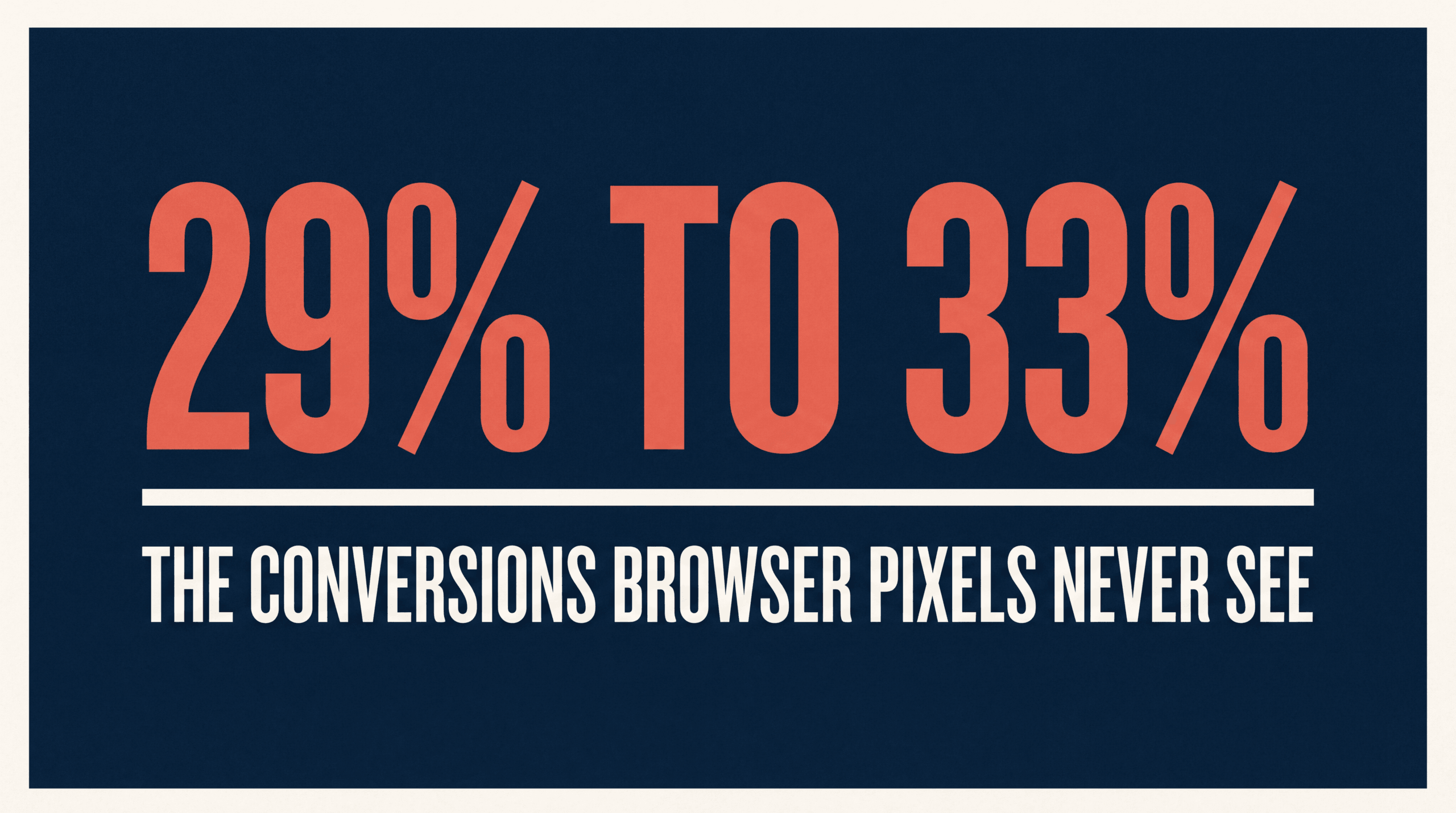
Most advertisers ask me which one they should use: Hyros or GA4. Wrong question. I’ve watched people run both at the same time and I’ve watched people try to run one without the other. The ones who try to use GA4 alone for ad attribution end up making budget decisions on data that misses 29-33% of their conversions. The ones who run Hyros without GA4 lose their site behavior and traffic source visibility. Both are real problems. The answer is understanding what each tool actually does, then running them together when your spend justifies the cost.
TL;DR
- GA4 is free web analytics. Hyros is paid ad attribution. GA4 tells you what happened on your site. Hyros tells you which ad dollar produced which sale, including sales that close weeks after the click.
- Most serious advertisers run both. GA4 for site analytics, Hyros for ad-level revenue attribution and feeding corrected conversions back to ad platforms.
- The tracking gap is the decision point. Hyros users report tracking 29-33% more conversions than native platform reporting (CheckThat.ai, 601 Trustpilot reviews). When that gap hits five or six figures per quarter, a dedicated tool pays for itself.
- GA4 caps attribution at 90 days. Info-product funnels and B2B sales cycles stretch past that. Hyros was built for long buyer journeys.
- GA4 cannot feed corrected conversions back to Meta or TikTok. Hyros can — that feedback loop trains ad algorithms on real data.
Verdict: Use GA4 as your baseline analytics layer — it is free, universal, and handles traffic and behavior reporting well. Add Hyros when your monthly ad spend is high enough that a 29-33% conversion tracking gap translates to five or six figures in misallocated budget per quarter.
What Is Hyros?
Hyros is an AI-powered ad attribution and tracking platform designed for high-spend direct-response advertisers, info-product businesses, coaching programs, agencies, and DTC brands. The platform uses server-side tracking to follow a buyer across multiple touchpoints — ad click, landing page, email sequence, webinar, phone call, checkout — and stitch that entire journey into a single revenue record. That record feeds back into ad platforms like Meta and Google to sharpen their bidding algorithms with corrected conversion data.
The core problem Hyros solves is the gap between what ad platforms report and what actually happened. According to an independent analysis by CheckThat.ai that aggregated 601 Trustpilot reviews, Hyros users consistently report tracking 29-33% more conversions than native platform reporting shows. That gap exists because browser-based pixels miss events when users switch devices, clear cookies, use ad blockers, or convert outside a standard attribution window. Hyros closes that gap with deterministic server-side tracking and long attribution windows that can stretch well past 60 days.
Hyros has over 4,000 customers and has tracked more than $3.5 billion in revenue across those accounts. As of April 2026, Hyros holds a 4.8 out of 5 rating on Trustpilot from 600+ reviews. Pricing starts at $230 per month on an annual plan or $379 per month on a monthly plan, with a $49 per month organic-only tier for businesses that do not run paid traffic. The platform backs new customers with a 90-day money-back guarantee.
For a deeper look at how the platform works, see our complete Hyros overview.
What Is GA4?
Google Analytics 4 is Google’s current web and app analytics platform, replacing Universal Analytics (UA), which was fully retired in July 2023. GA4 is free for standard properties and tracks user behavior across websites and mobile apps using an event-based data model. Every interaction — page view, scroll, click, video play, form submission, purchase — is recorded as an event, not a pageview in a session, which is a fundamental architectural shift from how UA worked.
GA4 includes attribution reporting, but attribution is not its primary function. The platform’s default attribution model is data-driven attribution (DDA), which uses machine learning to distribute conversion credit across touchpoints based on observed patterns in your data. Google made DDA the default for new conversion actions in late 2021 and removed four legacy models — first click, linear, time decay, and position-based — in 2023, citing that fewer than 3% of advertisers were using them. The remaining options are DDA, Paid and Organic Last Click, and Google Paid Channels Last Click.
The free version of GA4 has a daily BigQuery export cap of 1 million events and a data retention limit of 14 months. GA4 360, the enterprise tier, starts at approximately $50,000 per year and lifts those limits while adding features like rollup properties, subproperties, and higher event thresholds. For context, Universal Analytics used a “last non-direct click” default model, not pure last-click — a distinction that still trips up marketers migrating mental models from UA to GA4.
GA4 does not natively track phone calls, does not stitch buyer journeys across email, webinar, and checkout funnels, and does not feed corrected conversion data back to ad platforms for optimization. Those are fundamentally different jobs than what GA4 was built to do.
For background on the distinction between tracking and analytics, see our guide on ad tracking vs analytics.
How Do Hyros and GA4 Compare on Features?
This table covers the 15 dimensions that matter most when deciding whether GA4 alone is sufficient or whether a dedicated attribution platform belongs in the stack.
| Feature | Hyros | GA4 (Free) |
|---|---|---|
| Type | Dedicated ad attribution platform | Web and app analytics platform |
| Price | $230/mo (annual), $379/mo (monthly), $49/mo organic | Free (standard); GA4 360 from ~$50,000/year |
| Attribution Model | Multi-touch, long-window, server-side | Data-driven (default), Last Click, Google Paid Last Click |
| Tracking Method | Server-side + first-party data stitching | Client-side JavaScript tag (gtag.js), optional sGTM |
| Attribution Window | Configurable, often 60+ days | 30 days acquisition, 90 days other conversions (max) |
| Cross-Platform | Yes — Meta, Google, TikTok, email, phone, 100+ integrations | Yes — but limited to digital touchpoints GA4 can observe |
| Revenue Tracking | Exact revenue per ad, per funnel, per customer | Ecommerce events track revenue, but at aggregate level |
| LTV Tracking | Yes — tracks recurring revenue and upsells over time | Predictive LTV metric (modeled, not deterministic) |
| Server-Side | Native architecture | Available via sGTM (requires separate Cloud Run setup) |
| Cookie Dependency | Minimal — server-side stitching reduces cookie reliance | First-party cookies required; consent mode fills gaps with modeling |
| Ad Optimization Feedback | Yes — sends corrected conversions back to Meta, Google, TikTok | No — GA4 does not feed data back to non-Google ad platforms |
| Setup Complexity | Moderate — requires pixel + server-side configuration | Low for basic; high for sGTM, BigQuery, consent mode |
| Raw Data Access | Full export via API | BigQuery export (1M events/day cap on free tier) |
| Support | VIP dedicated support on all plans | Community forums, documentation; paid support on 360 only |
| Best For | High-spend advertisers needing revenue-level attribution | Every business needing free site analytics and traffic reporting |
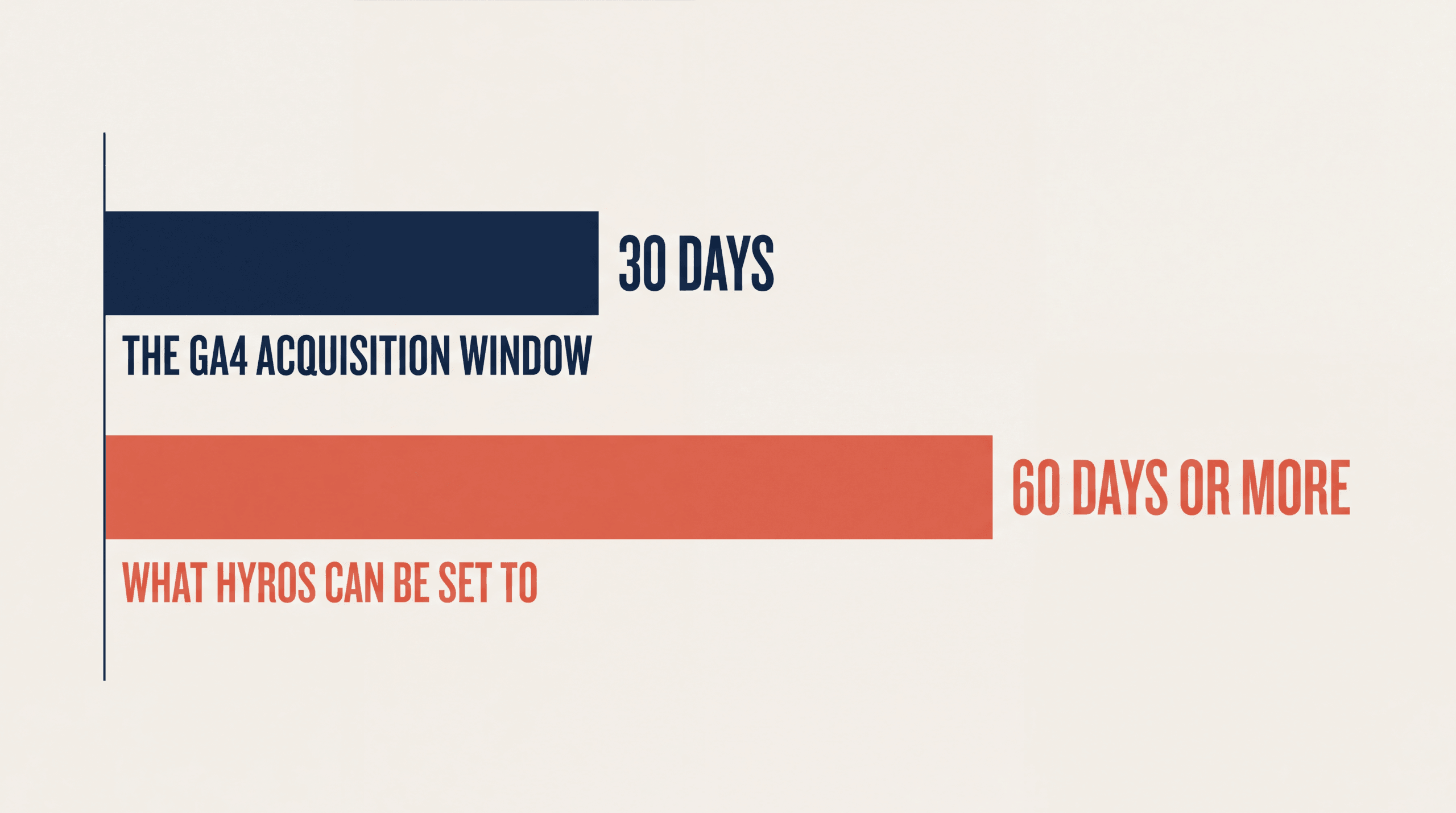
A few rows in this table deserve more context. The attribution window difference is one of the widest gaps between the two tools. GA4 caps at 90 days for non-acquisition conversions, which covers most B2C purchase cycles. But info-product funnels, high-ticket coaching programs, and B2B sales cycles regularly stretch past 90 days. A buyer who clicks an ad in January, joins a webinar in February, and purchases a $5,000 program in April falls outside GA4’s window entirely. Hyros was built for exactly that pattern.
The ad optimization feedback row is the other critical difference. Hyros sends corrected conversion events back to Meta’s Conversions API, Google’s offline conversion import, and TikTok’s Events API. That means the ad platform’s machine learning trains on more accurate data, which compounds into better targeting over time. GA4 does not do this for non-Google platforms. If you run Meta Ads as your primary channel, GA4 cannot improve Meta’s optimization signal the way Hyros can.
How Do Hyros and GA4 Handle Attribution Models?
Attribution models determine how credit for a conversion gets divided among the touchpoints in a buyer’s journey. This is where GA4 and Hyros take fundamentally different approaches.
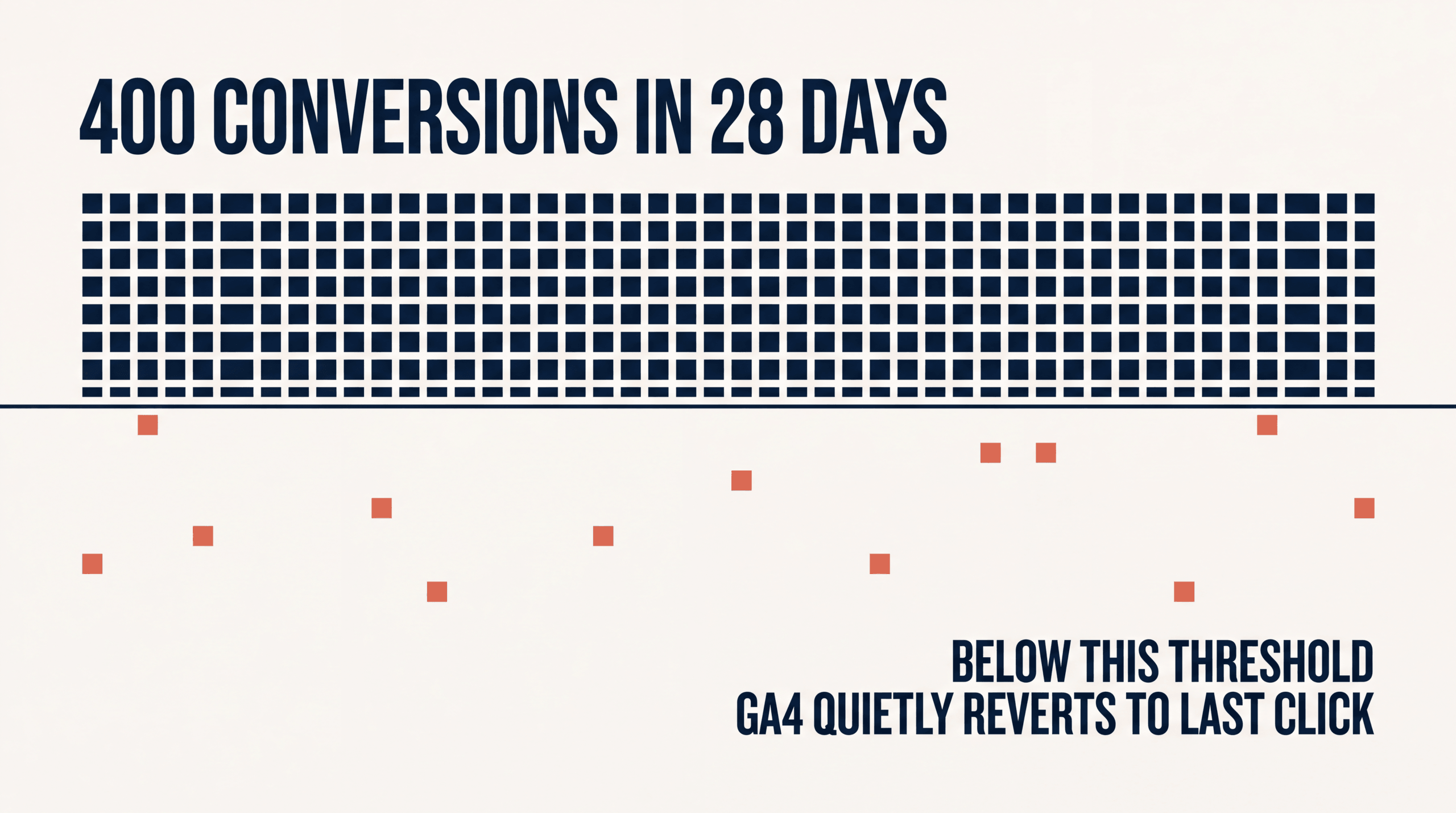
GA4’s approach centers on data-driven attribution, which uses a Shapley value algorithm to distribute credit based on observed patterns in your conversion data. The model considers time decay, format type, and the sequence of interactions before a conversion. It works well when you have sufficient volume — Google recommends at least 400 conversions within 28 days for DDA to produce reliable results. Below that threshold, GA4 silently falls back to last-click, which means many smaller advertisers are running on last-click without realizing it.
GA4 also offers “Paid and Organic Last Click” (all credit to the last non-direct click) and “Google Paid Channels Last Click” (if a Google Ads click exists in the path, Google Ads gets 100% credit regardless of position). That second model obviously favors Google’s own ad inventory, which is worth understanding before you trust the numbers it produces for cross-platform budget allocation.
Hyros’s approach uses server-side, deterministic tracking to build a complete customer record across every touchpoint — ad click, page visit, email open, webinar attendance, phone call, purchase, upsell, refund. Attribution is then applied across that full record with configurable rules and multi-touch models. The key difference is the data foundation. GA4 attributes credit based on the touchpoints its JavaScript tag can observe. Hyros attributes credit based on a server-side record that persists across devices, sessions, and weeks or months of buyer consideration time.
For businesses running a single Google Ads campaign to a Shopify checkout, GA4’s DDA is often good enough. For businesses running Meta, Google, TikTok, YouTube, and email across a multi-step funnel with a 30-90 day close cycle, GA4’s observable touchpoints represent a fraction of the actual buyer journey. That is the gap Hyros is designed to fill.
For a deeper explanation of how multi-touch models work, see our guide on multi-touch attribution explained. For the simpler model GA4 falls back to, see last-touch attribution.
How Does Tracking Work — Client-Side vs Server-Side?
GA4’s default tracking method is a client-side JavaScript tag (gtag.js) that fires in the user’s browser. When someone lands on your page, the tag executes, reads a first-party cookie, and sends an event to Google’s collection endpoint. This approach works until it doesn’t. Ad blockers strip the tag before it fires. IOS privacy features limit cookie persistence. Users who switch from phone to laptop break the session chain. Consent banners in the EU and other regulated markets prevent the tag from loading until the user opts in, which many never do.
Google offers a server-side alternative through Server-Side Google Tag Manager (sGTM), which runs in a Cloud Run container on your own infrastructure. Events route through your server before reaching Google, which improves data quality and sidesteps some ad-blocker issues. The catch is that sGTM requires a separate Google Cloud project, a custom subdomain, ongoing infrastructure cost, and non-trivial technical setup. It is not a checkbox in the GA4 interface. It is a DevOps project.
Hyros was built server-side from the start. Tracking events flow through Hyros’s servers, not the user’s browser. The platform also uses first-party data stitching — matching events across sessions using email addresses, phone numbers, or other deterministic identifiers that persist regardless of browser state, cookie expiration, or device switching. When a user clicks a Meta ad on their phone, opens an email on their laptop two weeks later, and purchases on their desktop a month after that, Hyros connects all three events into a single customer record.
The practical impact is measurable. According to a published Hyros case study, Dan Henry became 300% more profitable within 72 hours of implementing Hyros tracking. While individual results vary, the directional claim — that server-side tracking recovers revenue visibility that browser-based tracking misses — is consistent across Hyros’s 4,000+ customer base and the 29-33% tracking gap reported in the CheckThat.ai analysis.
Where GA4 Wins
GA4 has real, structural advantages over Hyros in several areas. I’ll be straight with you: pretending otherwise would be dishonest, and my goal here is to help you pick the right tool, not to sell you a subscription you don’t need.
Price. GA4 is free. For a standard property, you get event-based analytics, attribution reporting, audience segmentation, BigQuery export, and Google Ads integration at zero cost. There is no entry-level attribution tool on the market that beats free. Hyros starts at $230 per month, which is a non-trivial commitment for a business spending under $10,000 per month on ads.
Audience and traffic analytics. GA4 is an analytics platform. It tells you how many users visited, where they came from, what pages they viewed, how long they stayed, and where they dropped off. Hyros is an attribution platform. It tells you which ad produced which sale. These are different jobs. GA4 handles the first job well. Hyros was not built for it and does not try to compete on it.
Google Ads integration depth. GA4 and Google Ads share a data layer that no third-party tool can replicate. Audiences built in GA4 flow directly into Google Ads for remarketing. Conversion events import natively. Data-driven attribution in GA4 uses Google’s own models trained on its own data. If Google Ads is your only paid channel, GA4’s integration is tighter than anything Hyros can offer for that specific platform.
Ecosystem breadth. GA4 connects natively to Looker Studio, BigQuery, Google Ads, Google Search Console, Firebase, and the broader Google Marketing Platform. That ecosystem integration means reporting, analysis, and activation all live inside a single vendor’s stack. Hyros integrates with 100+ platforms but cannot replicate Google’s first-party ecosystem depth.
Installed base and community. Hundreds of millions of websites run GA4. Every digital marketing course teaches it. Every agency knows it. Every freelancer can set it up. The knowledge base, community support, and hiring pool for GA4 dwarfs any single attribution platform.
Where Hyros Wins
Hyros wins in the areas where GA4 was never designed to compete. That is the entire point of a dedicated attribution platform. And these are the areas I built Hyros specifically to solve, because I ran into every one of them in my own ad accounts.
Revenue-level attribution accuracy. Hyros tracks actual dollars to actual ads. Not modeled revenue, not sampled data, not aggregated channel-level estimates. When Hyros says Ad Set X produced $47,312 in revenue last month, that number ties to individual customer records with identifiable purchases. GA4 reports ecommerce revenue at the event level, but its attribution is modeled and sampled, especially at high traffic volumes.
Long attribution windows. Hyros’s windows extend well past GA4’s 90-day maximum. For info-product launches, high-ticket coaching programs, and B2B sales cycles, this is not a marginal feature. It is the difference between seeing the full funnel and seeing half of it.
Cross-platform ad optimization. Hyros feeds corrected conversion data back to Meta, Google, and TikTok through their respective server-side APIs. This means the ad platforms’ algorithms train on real conversions instead of the partial, cookie-degraded signal they see natively. GA4 cannot do this for Meta or TikTok. That feedback loop is why Hyros customers report ROAS improvements — the ad platforms get better data, so they make better bidding decisions.
Call tracking and offline conversions. Hyros tracks phone calls, attributes them to the originating ad, and includes them in the revenue record. GA4 has no native call tracking. Businesses that close sales over the phone — coaching, consulting, high-ticket services, local businesses — need this capability, and GA4 cannot provide it.
Funnel stitching across platforms. A buyer journey that spans Meta ad to landing page to email sequence to webinar to phone call to Stripe checkout involves five or six platforms. Hyros stitches that entire journey into one record. GA4 sees the parts that happen on your website and misses the rest.
Dedicated support. Hyros includes VIP support on every plan. GA4’s free tier offers documentation and community forums. Paid support requires GA4 360 at $50,000 per year. When tracking breaks during a product launch and you need a human on a call within the hour, the support model matters.
According to a published Hyros case study, Regenalight discovered $80K-$100K per month in wasted ad spend and grew from $1 million to $3 million per month in revenue in a single quarter after implementing Hyros tracking. That scale of growth requires confidence in the attribution numbers, which is the core value proposition a dedicated platform provides over a general-purpose analytics tool.
How Does Pricing Compare?
Pricing current as of April 2026. Verify directly with each vendor before purchasing.
| Tier | Hyros | GA4 |
|---|---|---|
| Free tier | No | Yes (standard property) |
| Entry paid | $230/mo (annual) or $379/mo (monthly) | Free |
| Organic-only | $49/mo | N/A (analytics is free) |
| Enterprise | Custom quote (scales with tracked revenue) | GA4 360 from ~$50,000/year |
| Server-side tracking | Included in all plans | Requires sGTM + Cloud Run (separate infrastructure cost) |
| Support at entry tier | VIP dedicated support | Documentation and community forums |
| Money-back guarantee | 90 days | N/A (free product) |
The pricing comparison is unusual because you are comparing a free product to a paid one. The right framing is not “GA4 is cheaper” — of course it is, it costs nothing. The right framing is whether the revenue visibility gap between GA4 and a dedicated attribution tool costs more than the attribution tool itself.
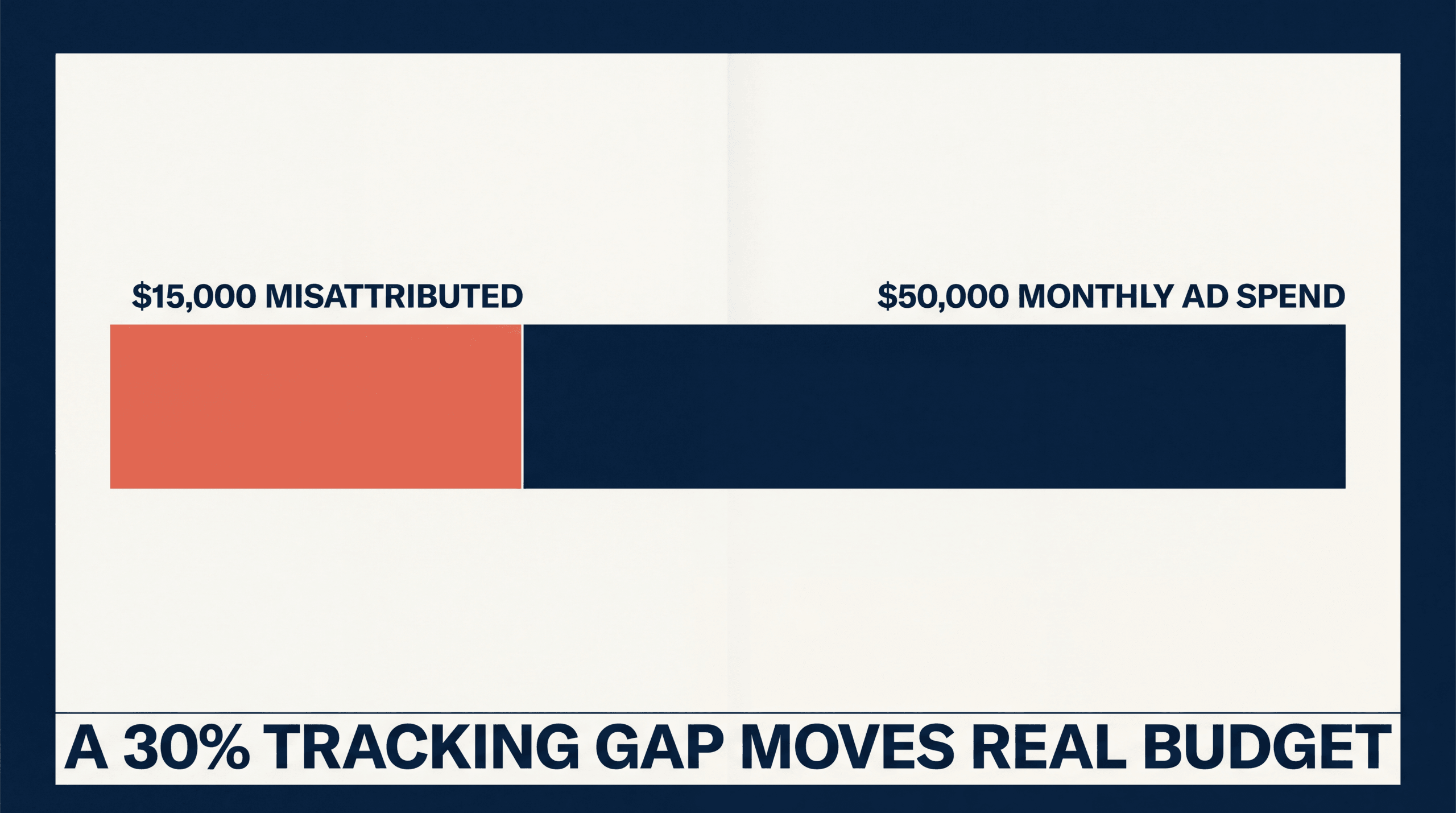
Here is a rough calculation. If you spend $50,000 per month on ads and your conversion tracking is off by 30% (the midpoint of the 29-33% gap reported in the CheckThat.ai analysis), you are making budget decisions based on data that misattributes $15,000 per month in ad spend. I’ve watched this play out in accounts where a single reallocation from a bad campaign to a good one covered an entire year of Hyros subscription cost. A Hyros subscription at $230 to $379 per month needs to recover a small fraction of that misallocation to pay for itself many times over.
If you spend $5,000 per month on ads, the math is different. The tracking gap still exists, but the dollar amount it represents may not justify a $230 per month subscription. That is a legitimate reason to run GA4 alone until your spend reaches the point where the gap hurts.
For a broader overview of how these tools fit into the attribution landscape, see our best ad attribution tools for 2026 roundup.
Who Should Use GA4 Alone?
GA4 alone is the right choice for several business profiles. The tool is genuinely good at what it does, and not every business needs a paid attribution layer.
- Early-stage businesses spending under $10,000 per month on ads. The tracking gap exists at every spend level, but the dollar cost of that gap below $10K per month rarely justifies a $230+ per month subscription. Run GA4, learn your funnels, scale spend, and add attribution tooling when the numbers demand it.
- Content-driven businesses that do not run paid traffic. Blogs, media sites, and organic-first businesses need traffic analytics, not ad attribution. GA4 handles that job well and for free.
- Google Ads-only advertisers. If your entire paid strategy runs through Google Ads and you use no other platforms, GA4’s native integration provides tighter data sharing than any third-party tool. Data-driven attribution within the Google ecosystem is strong because Google has full visibility into its own auction data.
- Businesses with simple, short funnels. A Shopify store running Google Shopping ads to a product page to checkout has a purchase cycle measured in minutes, not months. GA4’s 90-day window is more than sufficient, and the funnel is simple enough that browser-based tracking catches most of the signal.
- Teams without technical resources for another platform. GA4 is already installed on most websites. Adding a second tracking platform requires pixel installation, server-side configuration, integration setup, and ongoing maintenance. If you don’t have the bandwidth for that, GA4 alone is the pragmatic choice.
Who Needs Hyros on Top of GA4?
The strongest configuration for serious advertisers is not Hyros instead of GA4 — it is Hyros in addition to GA4. The two tools serve different functions, and running both gives you complete coverage. My recommendation is always to start with GA4 because it’s free and tells you things Hyros was not built to tell you, then add Hyros once your spend hits the threshold where the tracking gap starts hurting.
- Advertisers spending $30,000+ per month across multiple platforms. At this spend level, the 29-33% tracking gap represents $9,000 to $10,000 per month in misattributed budget. Hyros closes that gap. GA4 provides the site analytics layer that Hyros does not.
- Info-product businesses and high-ticket coaches. These funnels involve webinars, email sequences, application calls, and purchase cycles that stretch past GA4’s attribution windows. Hyros was built specifically for this buyer journey. GA4 still handles the website analytics side.
- Agencies managing paid media for multiple clients. An agency running 10 client accounts needs attribution that works across Meta, Google, TikTok, and email simultaneously, with per-client reporting and fast support when something breaks. Hyros delivers that. GA4 stays in place for each client’s site analytics.
- DTC brands running complex funnels with upsells, downsells, and subscriptions. If your checkout flow extends past a single Shopify cart into subscription upgrades, one-click upsells, or offline components, GA4’s tracking coverage falls short. Hyros tracks the full revenue record including post-purchase revenue.
- Businesses that close sales on the phone. GA4 cannot attribute phone calls to ads. Hyros can. If phone sales represent meaningful revenue, you need both tools.
- Any business where ad platform self-reporting produces numbers that don’t match your bank account. When Meta says it drove 200 sales but your Stripe dashboard shows 140, you have a tracking gap. GA4 won’t close it because GA4 has the same signal limitations that Meta does. Hyros closes it by tracking server-side with deterministic identifiers.
For a foundational overview of what attribution is and why it matters, see our primer on what is ad attribution.
FAQ
Does GA4 replace the need for a dedicated attribution tool?
No. GA4 is an analytics platform that includes attribution reporting, but it is not a dedicated attribution tool. GA4 tracks user behavior on your website and models conversion credit based on the touchpoints its JavaScript tag can observe. It does not track phone calls, does not stitch buyer journeys across email and webinar platforms, does not feed corrected conversions back to Meta or TikTok, and caps attribution windows at 90 days. A dedicated attribution tool like Hyros fills those specific gaps. Most businesses should run GA4 for site analytics and add a dedicated attribution platform when ad spend reaches the point where tracking gaps cost more than the attribution tool.
How much more accurate is Hyros than GA4 for ad attribution?
According to an independent analysis by CheckThat.ai that aggregated 601 Trustpilot reviews, Hyros users consistently report tracking 29-33% more conversions than native ad platform reporting. GA4 operates with the same signal limitations as ad platforms — it relies on browser-based events that degrade with ad blockers, cookie restrictions, cross-device behavior, and consent requirements. Hyros’s server-side architecture tracks conversions that browser-based tools miss. The exact improvement varies by business model, funnel complexity, and traffic sources, but the directional gap between server-side and client-side tracking is well documented across the attribution industry.
Can Hyros and GA4 run on the same site without conflicts?
Yes. Hyros and GA4 use independent tracking mechanisms that do not interfere with each other. GA4 runs via its JavaScript tag (gtag.js), while Hyros uses a separate pixel plus server-side tracking. Thousands of businesses run both simultaneously. The recommended configuration is GA4 for traffic analytics, audience behavior, and Google Ads integration, with Hyros layered on top for revenue-level ad attribution, cross-platform optimization feedback, and long-window funnel tracking.
Is GA4 truly free, or are there hidden costs?
GA4’s standard property is free with no usage fees for data collection. Hidden costs emerge at scale. The BigQuery export, which is how you access raw event-level data, caps at 1 million events per day on the free tier — above that, you need GA4 360 starting at approximately $50,000 per year. Server-side tagging through sGTM requires a Google Cloud project with infrastructure costs that vary by traffic volume. Data retention on the free tier maxes out at 14 months. Advanced attribution modeling requires sufficient conversion volume — Google recommends at least 400 conversions in 28 days for data-driven attribution to activate, or the system silently falls back to last-click.
What is the biggest limitation of GA4 for paid media advertisers?
The single biggest limitation is that GA4 does not feed corrected conversion data back to non-Google ad platforms. When you run Meta Ads, TikTok Ads, or any non-Google paid channel, GA4 can report on those conversions in its interface, but it cannot send improved conversion signals back to those platforms to optimize their bidding algorithms. Hyros does this through Meta’s Conversions API, Google’s offline conversion import, and TikTok’s Events API. That feedback loop is what drives ROAS improvement over time — the ad platform’s machine learning gets better data, so it finds better audiences and makes better bid decisions.
Does GA4’s data-driven attribution work for all businesses?
Not reliably. GA4’s data-driven attribution requires at least 400 conversions for a given key event within the lookback window to produce meaningful results. Below that threshold, GA4 silently falls back to last-click attribution without notifying you. Many small and mid-size advertisers believe they are running multi-touch data-driven attribution when they are actually running last-click. You can check by looking at your conversion volume in GA4’s attribution reports. If your monthly conversions for a specific event are under a few hundred, data-driven attribution is likely not active for that event.
Standalone Summary
Hyros and GA4 serve different jobs. GA4 is a free web analytics platform that tracks site behavior and provides modeled attribution reporting across digital touchpoints. Hyros is a paid ad attribution platform that uses server-side tracking to connect every ad click to every dollar of revenue, including conversions that happen across devices, across weeks, and across platforms that GA4 cannot observe. GA4 is the right baseline for every business. Hyros is the right addition when monthly ad spend reaches $30,000 or more and the 29-33% tracking gap between ad platform self-reporting and actual revenue starts costing more than a Hyros subscription. The strongest setup for serious advertisers is both tools running simultaneously: GA4 for traffic analytics and audience insights, Hyros for revenue-level attribution, cross-platform ad optimization feedback, and long-window funnel tracking. Hyros pricing starts at $230 per month annually with a 90-day money-back guarantee. GA4 is free for standard properties, with GA4 360 starting near $50,000 per year for enterprise needs.