

Google Ads Bidding Strategies and Attribution: How Smart Bidding Depends on Accurate Data
Most advertisers think Google’s Smart Bidding is the problem when their campaigns underperform. They’re wrong. I built Hyros after watching the same pattern repeat across hundreds of ad accounts: the bidding algorithm is actually fine. What’s broken is the data feeding it. Smart Bidding is Google’s suite of automated, machine-learning-driven bid strategies that now controls the majority of auction-level decisions for advertisers. Feed it incomplete or inaccurate attribution data, and the algorithm optimizes toward the wrong outcomes. That’s the real issue. This guide breaks down every major Google Ads bidding strategy, explains how attribution models shape bid decisions, and shows where the data pipeline breaks in 2026.
TL;DR
- Google Ads Smart Bidding uses machine learning to set bids at the auction level. The four strategies (Target CPA, Target ROAS, Maximize Conversions, and Maximize Conversion Value) all depend on your conversion tracking data. If tracking misses or misattributes conversions, the algorithm optimizes against a broken signal. Google deprecated Enhanced CPC for Search and Display in March 2025.
- Data-Driven Attribution (DDA) is now the only multi-touch model in Google Ads. As of September 2023, Google removed first-click, linear, time-decay, and position-based models. Every advertiser now uses DDA or last-click. DDA distributes conversion credit across touchpoints using your account’s actual data, directly changing how Smart Bidding allocates budget.
- Enhanced Conversions improve attribution accuracy by 15-30% by sending hashed first-party data (email, phone, address) back to Google with conversion events. Server-side tracking platforms like Hyros go further by operating independently of Google’s measurement, feeding corrected conversion data back so the algorithm optimizes against verified sales.
What Are Google Ads Bidding Strategies?
Google Ads bidding strategies are the rules that determine how much you bid on each ad auction. Every time someone searches a keyword you are targeting, Google runs a real-time auction. Your bidding strategy decides how much you are willing to pay for that click or conversion. The strategy you choose shapes your cost structure, campaign performance, and ultimately your return on ad spend.
There are two categories: manual bidding and automated (Smart) bidding. Manual bidding gives you direct control over individual keyword bids. Automated bidding hands that control to Google’s machine learning, which adjusts bids for every auction based on signals like device, location, time of day, audience lists, and dozens of other contextual factors that no human could process in real time.
The strategic question is not whether automated bidding works. Google processes enough auction data to outperform manual bidding in most cases. The real question is whether the conversion data feeding the automation is accurate enough to produce good decisions. That is where attribution enters the picture.
For a broader primer on how attribution works across all ad platforms, see our guide on what is ad attribution.
How Does Smart Bidding Work?
Smart Bidding is Google’s umbrella term for bid strategies that use machine learning to optimize for conversions or conversion value at the individual auction level. Google calls this “auction-time bidding” because the algorithm makes a separate bid decision for each search query, factoring in real-time signals.
Let’s imagine a person searches “best attribution software” at 9am on a Tuesday from their iPhone in Austin. Your Target CPA campaign runs a real-time auction. The algorithm knows this user is on mobile, in a high-income metro, searching an intent-rich phrase, during business hours. It bids $8 instead of $4 for that click. That is Smart Bidding doing exactly what it is supposed to do. The problem is what happens next: if the same person clicks your ad, bounces, comes back three days later via a direct visit, and converts, Google’s cookie has a 50/50 chance of connecting those sessions. If it misses the connection, Smart Bidding never learns that this audience segment and this search term produced a real sale. So it bids $4 next time. You are leaving money on the table because the data is broken, not the algorithm.
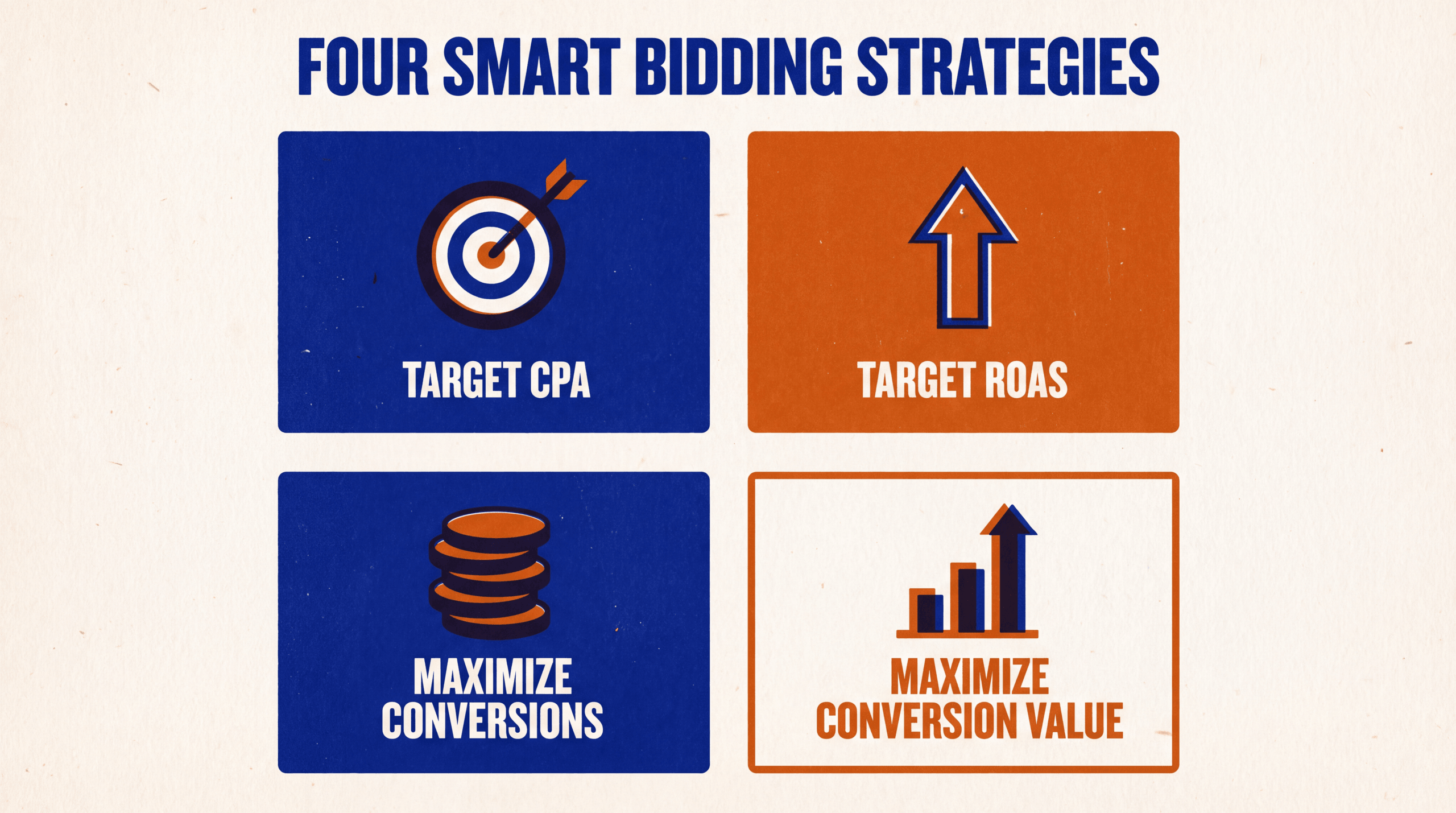
The Four Smart Bidding Strategies
Target CPA (Cost Per Acquisition)
Target CPA sets bids to get as many conversions as possible at or below your target cost per acquisition. If you set a target CPA of $50, the algorithm adjusts bids auction by auction to average $50 per conversion across your campaign.
When it works: Lead generation campaigns where every lead has roughly equal value. B2B advertisers driving demo requests or form fills. Service businesses tracking phone calls and appointments.
When it breaks: If your conversion tracking misses 20-30% of actual conversions (common with browser-only tracking), the algorithm sees fewer conversions than actually occurred. It raises bids to chase the volume you told it to hit, driving your real CPA above target. You end up paying more per lead because the algorithm does not know it is already performing.
Target ROAS (Return on Ad Spend)
Target ROAS sets bids to maximize conversion value while achieving a target return. If you set a 400% target ROAS, the algorithm aims to generate $4 in tracked revenue for every $1 spent.
When it works: Ecommerce accounts with variable order values. Businesses where a $500 sale and a $50 sale both come through the same campaign. DTC brands on Shopify or WooCommerce with accurate revenue tracking.
When it breaks: If your attribution system double-counts revenue (because both Google and Meta claim credit for the same sale), Target ROAS sees inflated revenue numbers and bids more aggressively than warranted. Databox research found that summing all platform-reported conversions typically produces 150-250% of actual closed customers. When your Target ROAS algorithm believes it is hitting 5x when the true number is 2.5x, it will scale into unprofitable territory.
Maximize Conversions
Maximize Conversions spends your entire daily budget to get the most conversions possible, with no CPA target. The algorithm does not care about cost efficiency. It cares about volume.
When it works: New campaigns in learning phase where you want Google to collect conversion data as fast as possible. Accounts with strict daily budgets where overspend is not a risk.
When it breaks: Without a CPA cap, this strategy will happily pay $200 for a conversion that is worth $50 to your business. It is designed for data collection, not sustained profitability.
Maximize Conversion Value
Maximize Conversion Value spends your entire daily budget to generate the highest total conversion value, with no ROAS target. Like Maximize Conversions, it prioritizes volume (of revenue) over efficiency.
When it works: Ecommerce accounts in early scaling mode. Situations where capturing maximum revenue within a fixed budget is more important than hitting a specific return threshold.
When it breaks: Same issue as Maximize Conversions. No efficiency floor. Use this when you know your margin can absorb variability and you want the algorithm to learn value signals fast.
What Happened to Enhanced CPC?
Enhanced CPC (ECPC) was a hybrid strategy that let you set manual bids while allowing Google to adjust them up or down based on conversion likelihood. Effective the week of March 31, 2025, Google deprecated ECPC for Search and Display campaigns. All ECPC campaigns were automatically migrated to Manual CPC.
This matters because ECPC was the last semi-manual option for advertisers who wanted some algorithmic help without fully handing over bid control. With ECPC gone, advertisers now choose between full manual control (Manual CPC) and full algorithmic control (Smart Bidding). There is no middle ground.
For advertisers spending $50,000 or more per month, this forces a decision: trust Google’s algorithm with your budget, or manage every bid yourself. Neither is ideal if your conversion data has gaps. Manual CPC means you are guessing without machine learning. Smart Bidding means you are automating on potentially bad data.
How Does Data-Driven Attribution Affect Bidding?
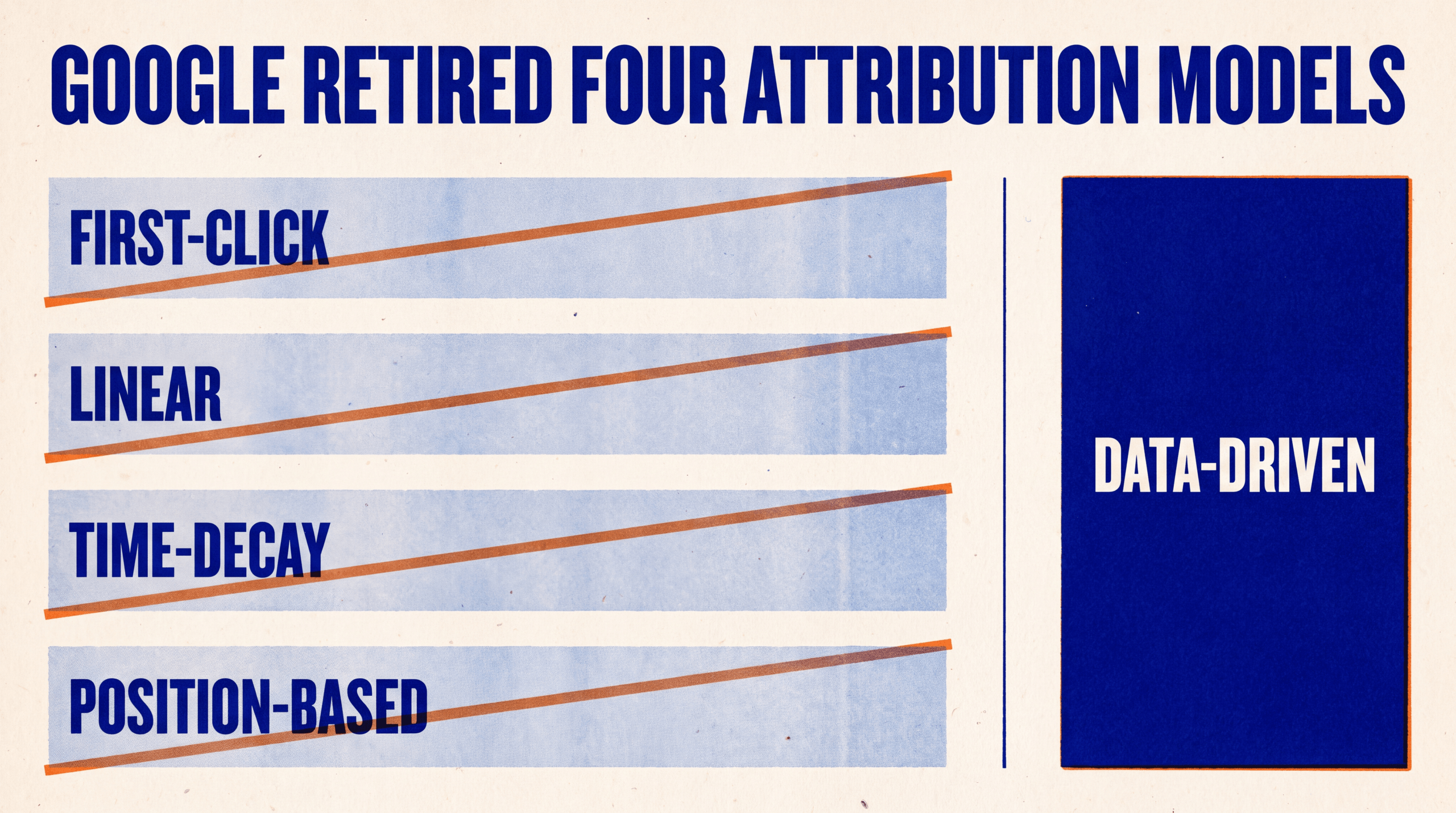
Data-Driven Attribution (DDA) is the attribution model that determines how Google distributes conversion credit across the touchpoints in a customer’s journey. As of September 2023, DDA is the only multi-touch attribution model available in Google Ads. Google removed first-click, linear, time-decay, and position-based models, leaving only DDA and last-click.
How DDA Works
DDA uses machine learning to analyze your account’s actual conversion data. It looks at which combinations of keywords, ads, and campaigns appear in conversion paths versus non-conversion paths, then assigns fractional credit to each touchpoint based on its statistical contribution to driving conversions.
For example, if your data shows that customers who click a branded search ad after first clicking a non-branded search ad convert at 3x the rate of those who only click the branded ad, DDA will assign meaningful credit to the non-branded keyword. Last-click would give the branded keyword 100% of the credit.
Why This Matters for Smart Bidding
Smart Bidding uses the attributed conversion data to decide how much to bid. When your account used last-click attribution, Smart Bidding only saw the final click before conversion. It would aggressively bid on branded keywords and bottom-of-funnel terms while underbidding on the awareness and consideration campaigns that actually started the customer journey.
With DDA distributing credit across multiple touchpoints, Smart Bidding can now see the value of upper-funnel keywords. A “what is attribution software” search that initiates a journey eventually worth $5,000 in revenue will receive proportional credit, and proportional bidding investment.
Google’s own recommendation is to pair Smart Bidding with DDA instead of last-click. This combination gives the algorithm the fullest picture of which touchpoints contribute to conversions, instead of just which ones happen to be the last click.
The Limitation of DDA
DDA only works within Google’s ecosystem. It can see Google Search clicks, Shopping clicks, YouTube views, and Display impressions. It cannot see Meta Ads clicks, TikTok views, email touchpoints, direct visits, or organic search. If 40% of your customer’s journey happened on Meta before they searched your brand name on Google, DDA will attribute the conversion entirely to Google touchpoints. That is all it can see.
This is the walled-garden problem. DDA is multi-touch within Google, but it is effectively last-platform attribution across your full marketing stack. For a deeper look at how walled gardens distort attribution, see our guide on multi-touch attribution.
What Are Conversion Windows and Why Do They Matter?
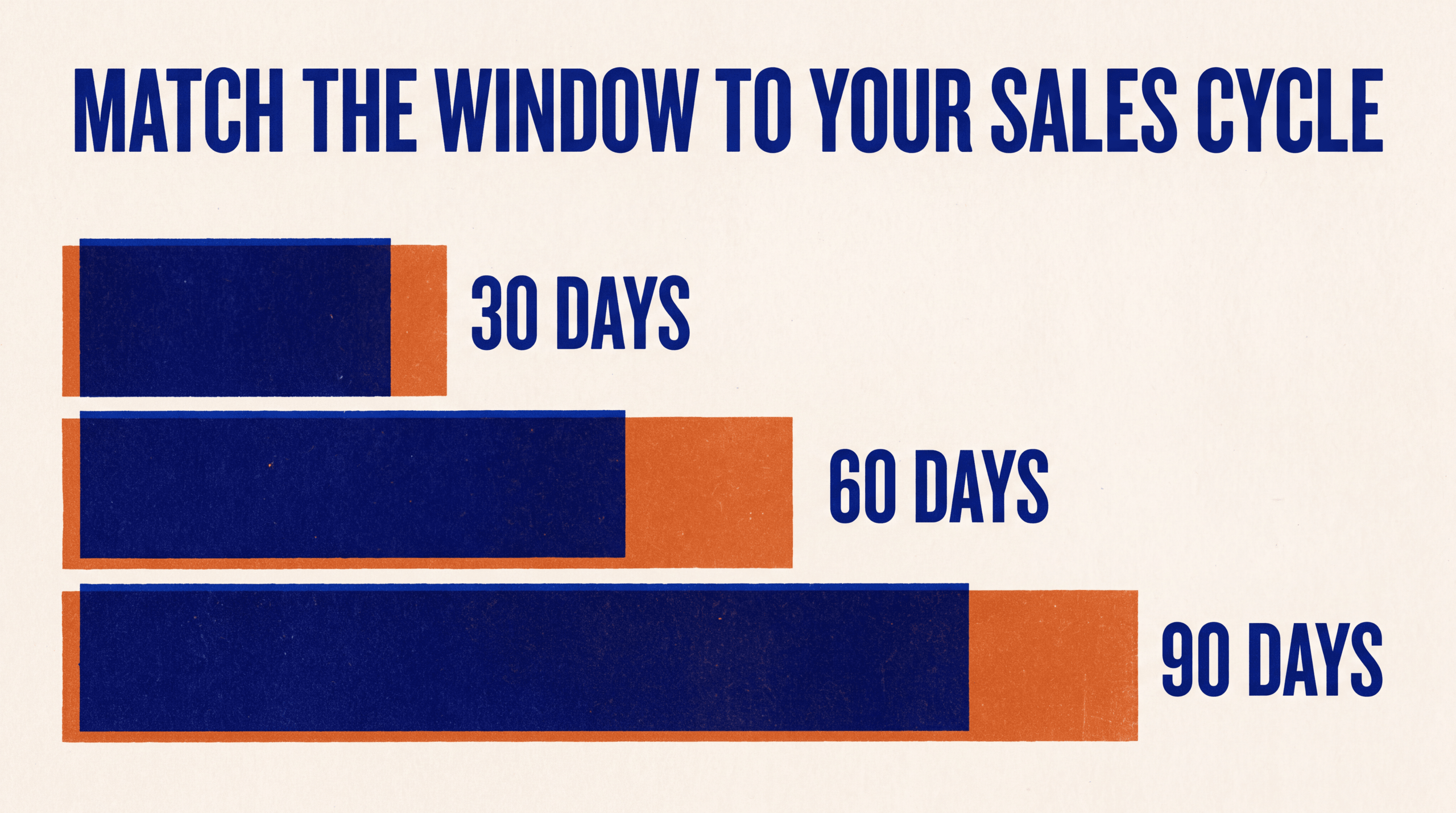
A conversion window is the time period after an ad click or impression during which Google will credit a conversion to that ad. If your conversion window is set to 30 days and a customer clicks your ad on April 1, any purchase they make through April 30 gets attributed to that click. A purchase on May 1 does not.
Default Conversion Windows in Google Ads
| Window Type | Default Setting | Maximum |
|---|---|---|
| Click-through | 30 days | 90 days |
| Engaged-view (YouTube) | 3 days | 30 days |
| View-through (Display) | 1 day | 30 days |
These defaults work for most ecommerce purchases. A shopper clicks a product ad and buys within a few weeks. But they fail for high-ticket products, B2B sales, and any business where the decision cycle exceeds 30 days.
If you sell a $20,000 coaching program and the average time from first click to purchase is 45 days, a 30-day click window means every customer who takes longer than 30 days to decide shows up as an “unattributed” conversion. Google does not know that ad drove the sale. Smart Bidding does not learn from it. Your campaign looks less profitable than it is, and the algorithm bids less aggressively than it should.
The fix is straightforward: extend your conversion windows to match your actual sales cycle. Google allows up to 90 days for click-through conversions. If your sales cycle is 60 days, set the window to 60 or 90 days. Every conversion you capture inside the window is a data point Smart Bidding uses to improve.
For businesses that need attribution windows beyond 90 days, third-party attribution platforms like Hyros track the full customer journey without any window limit. An ad click six months ago that eventually leads to a sale is still attributed to the originating campaign.
How Does Enhanced Conversions Improve Bidding Data?
Enhanced Conversions is Google’s method for improving conversion tracking accuracy by sending hashed first-party customer data alongside conversion events. When a customer converts, your site sends hashed versions of their email address, phone number, or mailing address to Google. Google matches this data against its signed-in user base to connect the conversion to the ad click that started the journey, even if cookies were blocked, expired, or the customer switched devices.
Google’s documentation shows that properly implemented Enhanced Conversions typically improve conversion attribution accuracy by 15-30%. That improvement comes from recovering conversions that would otherwise be missed due to ad blockers (used by over 30% of desktop users), Safari ITP restrictions that cap cookies to 7 days, and users who clear cookies regularly.
Why This Feeds Better Bidding
Every recovered conversion is a data point Smart Bidding uses to calibrate its model. If Enhanced Conversions recovers 20% more conversions, the algorithm has 20% more signal to learn from. It gets better at distinguishing high-intent from low-intent auctions. It bids more accurately. Over time, this compounds into lower CPAs and higher ROAS. Not because you changed your strategy. Because you improved the data quality feeding the strategy.
Google announced plans to require the conversion_environment parameter for offline conversion imports, but later rescinded the mandate. The parameter remains recommended for accurate environment tagging. Businesses that track phone sales, in-person meetings, or any conversion that happens outside the browser should still send structured data back to Google for Smart Bidding to learn from those outcomes.
For a step-by-step walkthrough on calculating the returns from improved tracking, see our guide on how to calculate ROAS.
Where Does Google Ads Tracking Break?
Google Ads tracking breaks in predictable places. Understanding these gaps is the difference between running Smart Bidding on accurate data and running it on a fiction.
Cross-Platform Blind Spots
Google cannot see what happens on Meta, TikTok, email, or any other channel. If a customer clicks a Meta ad, visits your site from an email, and then converts after a Google search, Google will claim full credit for the conversion. Meta will also claim full credit. Both platforms are telling the truth within their own limited view. And both are wrong about the full picture.
According to the Hyros Shopify integration data, Google underreports conversions by approximately 29% compared to server-side tracked data. That means Google is simultaneously overclaiming some conversions (by not seeing prior touchpoints on other platforms) and undercounting others (because its own tracking misses them). The net effect on Smart Bidding depends on which error is larger for your specific account.
Cookie Expiration and ITP
Safari’s Intelligent Tracking Prevention caps first-party cookies set by JavaScript to 7 days. Some configurations reduce this to 24 hours. If a customer clicks your Google ad on Safari and returns 8 days later to buy, the conversion is not attributed to the click. The cookie expired. Smart Bidding never learns that the keyword, ad, or audience that generated that click was valuable.
This is not a small population. Safari holds approximately 20% of global browser share and over 50% on mobile in the United States. That is a large slice of conversions going dark.
Ad Blocker Interference
Users running ad blockers (over 30% of desktop traffic globally) block the Google Ads conversion tracking tag from loading. Their purchases are invisible to Google Ads entirely. Enhanced Conversions partially mitigates this if the conversion event is fired server-side, but most implementations still depend on the browser-side gtag.
Offline and Delayed Conversions
B2B businesses, coaching programs, and any model with phone-based or sales-team-driven closes face a specific problem: the conversion happens offline. Google has an offline conversion import pipeline, but it requires matching the click ID (GCLID) stored at the time of the click with the CRM record of the sale. If your CRM does not capture GCLID, if the customer clicked from one device but called from another, or if the sale closes beyond your conversion window, Google never learns about it.
How Does Hyros Improve Google Ads Bidding Performance?
Hyros addresses the data-quality problems that degrade Smart Bidding by building an independent attribution layer that feeds corrected conversion data back to Google. I originally designed Hyros for my own businesses because I couldn’t scale them when attribution was broken. Instead of relying on Google’s own tracking (subject to cookie expiration, ad blockers, and cross-platform blind spots), Hyros tracks users through first-party identifiers and server-side events, then sends verified conversions back to Google’s algorithm.
Independent Tracking
Hyros tracks conversions server-side using deterministic matching (email, phone number). This means a customer who clicks a Google ad on their phone, browses on their laptop, and buys a week later through an email link is still attributed back to the original Google click. Google’s native tracking would likely miss this conversion due to cross-device gaps and cookie expiration.
According to data published on the Hyros Shopify integration page, Hyros tracks 20-50% more sales than ad platforms alone. For Smart Bidding, every additional conversion recovered is a training signal that improves the algorithm’s accuracy.
Corrected Conversion Signals
Hyros sends corrected conversion data back to Google Ads via offline conversion imports. This means Smart Bidding learns from the actual revenue your campaigns generated, not Google’s estimated version of it. When the algorithm knows the true value of each keyword and audience, it bids proportionally.
CEO of Hyros Alex Becker has stated that across hundreds of ad accounts audited by his team, “25-45% of winning ads are missed by standard tracking.” When Smart Bidding cannot see those winning ads, it underbids on them. Feeding verified data back closes that gap.
AIR (AI Optimization)
Hyros’s AIR feature feeds enriched conversion signals back to ad platform algorithms in real time. According to a martech.zone case study, one advertiser saw a 14.44% revenue boost within five days of enabling AIR on their Google Ads campaigns. The mechanism is straightforward: better data in means better bidding decisions out.
Tony Robbins’ ad team used Hyros data to scale Google Ads spend by 43% on Business Mastery campaigns over six months. That level of scale requires confidence in the attribution data. If the team had been working from Google’s self-reported numbers (cross-platform blind spots and cookie-based gaps included), a 43% spend increase would have been a gamble. With independent attribution confirming the true ROAS, it was a calculated decision.
For more on how independent attribution compares to platform-side tracking, see our guide on ad tracking vs analytics and the server-side tracking deep dive.
How Should You Set Up Google Ads Bidding for Accurate Attribution?
Setting up Google Ads bidding for maximum accuracy requires aligning your conversion tracking, attribution model, and bid strategy into a coherent system. Here is a step-by-step approach.
Step 1: Audit Your Conversion Actions
Open Google Ads and go to Goals > Conversions > Summary. Review every active conversion action. Remove duplicates. Make sure each action represents a real business outcome (purchase, qualified lead, booked call) and not a micro-conversion (page view, scroll depth) that inflates your numbers without representing revenue.
Step 2: Set Data-Driven Attribution
Since DDA is now the default and only multi-touch option, verify that your conversion actions are set to use it. Go to each conversion action’s settings and confirm the attribution model is “Data-driven.” If any were created before the September 2023 migration, they should have been automatically updated, but verify.
Step 3: Implement Enhanced Conversions
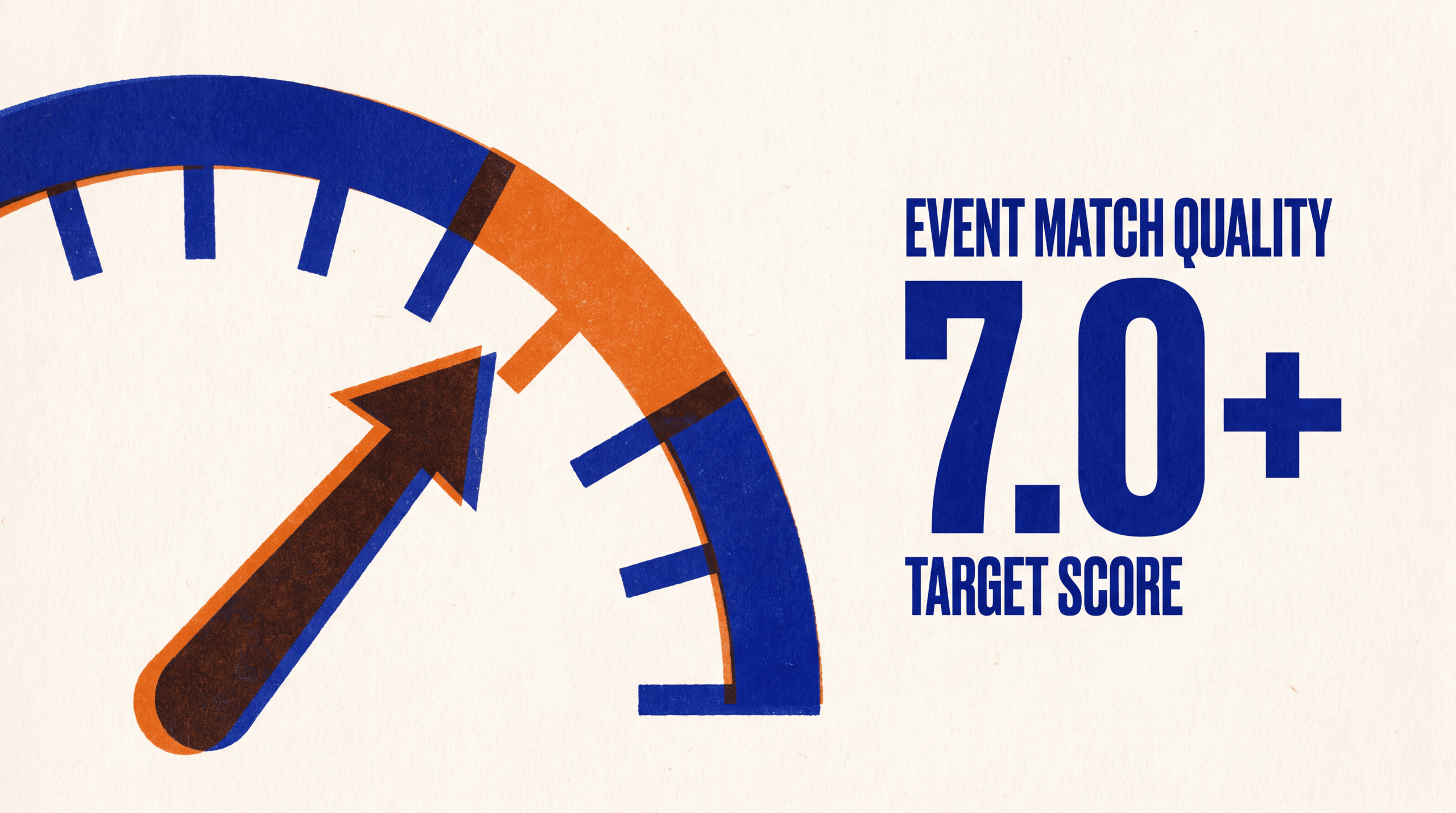
Set up Enhanced Conversions for your primary conversion actions. This requires modifying your conversion tag to send hashed customer data (email at minimum, phone and address for better match rates). Google’s Tag Assistant tool can verify the implementation. Target an Event Match Quality score above 7.0 for best results.
Step 4: Extend Conversion Windows
Match your conversion windows to your actual sales cycle. For ecommerce with fast purchase decisions, 30 days is usually sufficient. For B2B, coaching, or high-ticket products, extend to 60 or 90 days. Check your actual time-to-conversion data in Google Ads under Tools > Attribution > Paths to see the distribution.
Step 5: Choose the Right Smart Bidding Strategy
Match the strategy to your business model:
- Lead generation with roughly equal lead values: Target CPA
- Ecommerce with variable order values: Target ROAS
- New campaigns in learning phase: Maximize Conversions (temporarily)
- Ecommerce scaling within a fixed budget: Maximize Conversion Value
Step 6: Feed External Conversion Data
If conversions happen offline, through CRM pipelines, or across platforms, import them into Google Ads via the offline conversion import pipeline. Better yet, use a platform like Hyros that automates this process: capturing server-side conversions and feeding them back to Google continuously.
FAQ
What is the best Google Ads bidding strategy?
The best strategy depends on your business model and data maturity. Target ROAS works best for ecommerce with variable order values and at least 50 conversions per month. Target CPA works best for lead generation where each lead has similar value. Both require accurate conversion tracking. Without reliable data, Smart Bidding optimizes toward noise. Start with Maximize Conversions to collect data, then switch to Target CPA or Target ROAS once you have 30-50 conversions in your window.
How many conversions does Smart Bidding need to work?
Google recommends a minimum of 30 conversions in the past 30 days for Target CPA and 50 for Target ROAS. These are minimums, not ideals. Accounts with 100 or more monthly conversions see better Smart Bidding performance because the algorithm has more data to learn from. If your volume is below these thresholds, consider broadening your conversion actions temporarily or extending your conversion window to capture more data points.
Why did Google remove first-click and linear attribution models?
Google removed first-click, linear, time-decay, and position-based attribution in September 2023 because Data-Driven Attribution outperformed all of them on Google’s internal benchmarks. The fixed-formula models distributed credit using arbitrary rules (40/20/40 for position-based, equal splits for linear). DDA uses your account’s actual data to determine credit distribution. Google’s position is that DDA is strictly superior for all accounts with sufficient conversion volume. Accounts without enough data to power DDA fall back to last-click.
Does attribution model affect my ad costs?
The attribution model does not directly change what you pay per click. But it changes which clicks Smart Bidding values, which indirectly changes your bids and costs. Under last-click, the algorithm bids aggressively on branded and bottom-of-funnel keywords (because they get all the credit) and underbids on prospecting keywords. Under DDA, credit spreads across the full journey, so the algorithm invests more evenly across the funnel. This often lowers branded CPCs while increasing non-branded investment. That shift improves overall efficiency.
How does Hyros work with Google Ads Smart Bidding?
Hyros tracks conversions independently using server-side, first-party data matching. It then feeds verified conversion data back to Google Ads through the offline conversion import pipeline. This gives Smart Bidding access to conversions that Google’s own tracking missed: cross-device purchases, post-cookie-expiration conversions, and sales that happened offline. The algorithm optimizes against a more complete and accurate dataset, which produces better bid decisions. Hyros reports that its platform tracks 20-50% more sales than ad platforms alone, and brands using Hyros see at least a 15% increase in ad revenue on average.
Should I use Manual CPC or Smart Bidding?
Manual CPC gives you full control but requires constant optimization and cannot process auction-level signals like device, location, and audience in real time. Smart Bidding handles those signals automatically but requires accurate conversion data. For accounts spending under $5,000 per month with low conversion volume, Manual CPC can work if you have time to manage bids. For accounts spending over $10,000 per month with 30 or more monthly conversions, Smart Bidding paired with strong conversion tracking will outperform manual management in most cases.
Standalone Summary
Google Ads Smart Bidding uses machine learning to set auction-level bids, and its performance depends directly on the quality of conversion data it receives. The four Smart Bidding strategies (Target CPA, Target ROAS, Maximize Conversions, and Maximize Conversion Value) each optimize toward different goals but all require accurate attribution. Google deprecated Enhanced CPC in March 2025 and removed all multi-touch attribution models except Data-Driven Attribution in September 2023, leaving DDA and last-click as the only options. DDA distributes credit across touchpoints using actual account data, which changes how Smart Bidding values upper-funnel keywords. Enhanced Conversions recover 15-30% more conversions by sending hashed first-party data to Google. Conversion windows should match your sales cycle length, up to 90 days maximum in Google Ads. The primary tracking gaps (cross-platform blind spots, cookie expiration, ad blockers, and offline conversions) all reduce the data Smart Bidding learns from. Independent attribution platforms like Hyros address these gaps by tracking conversions server-side and feeding corrected data back to Google, giving the algorithm a more complete picture of which campaigns actually drive revenue.
See how Hyros feeds verified conversion data to Google Ads Smart Bidding. Book a demo